ChatGPT mentions my business but sends almost no clicks. Is that a problem? Not on its own. In ChatGPT’s Business Hub, a local business gets a mention each time ChatGPT shows it in an answer. The person doesn’t have to open your listing or visit your website. Expect mentions to far outnumber clicks. The gap matters in three cases. ChatGPT gets your details wrong. The topics don’t match what you sell. Or the people who click land on a page that doesn’t answer them.
- What do mentions and clicks in Business Hub measure?
- Why mentions outnumber clicks
- When the gap is a problem
- Does claiming your business make ChatGPT recommend you more?
- What to check first
- A worked example: a kayak hire business
What do mentions and clicks in Business Hub measure?
Business Hub is OpenAI’s tool for claiming your business in ChatGPT. You don’t need an Ads account to claim. It launched as a beta on 10 November 2026. Once your claim and identity check are approved, the Insights tab shows three things over the past 28 days.
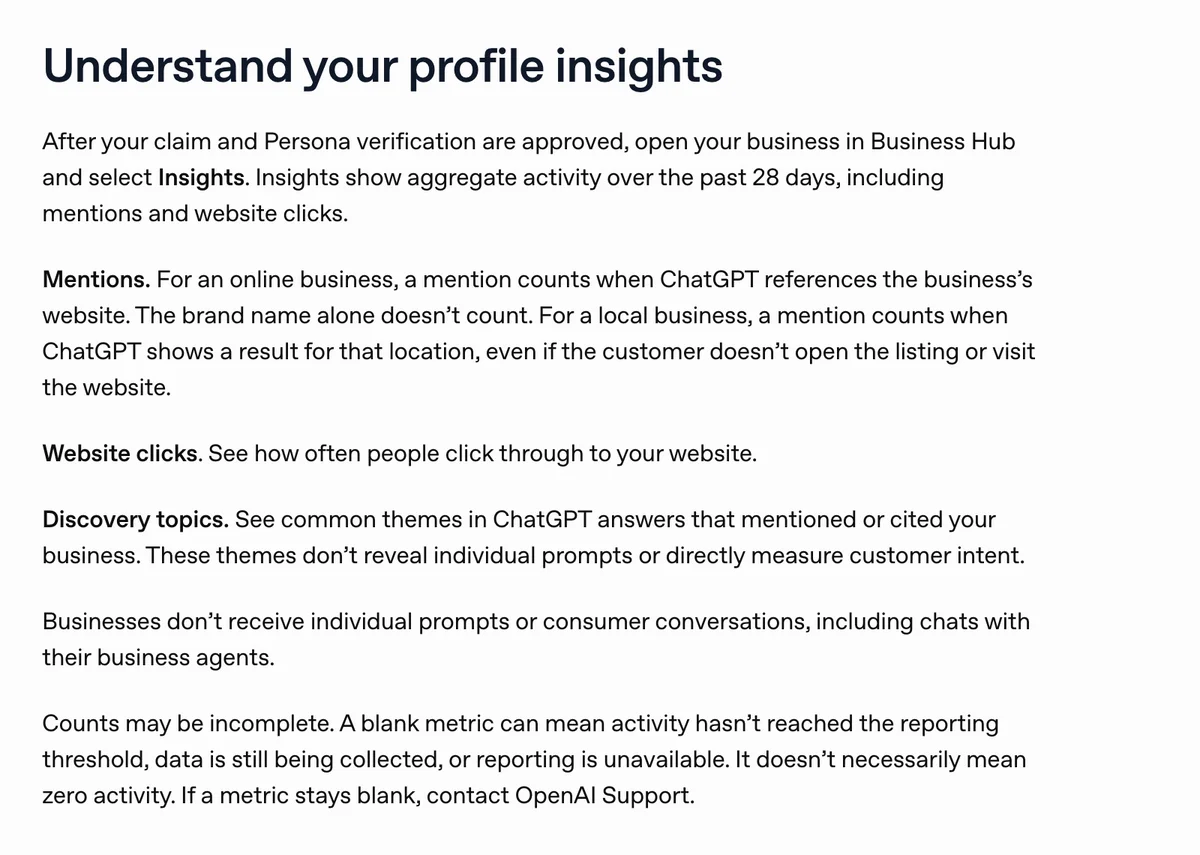
Mentions. OpenAI’s help page defines these two ways. For a local business, a mention counts “when ChatGPT shows a result for that location, even if the customer doesn’t open the listing or visit the website.” For an online business, a mention counts when ChatGPT references your website. Your brand name alone doesn’t count.
Website clicks. How often people clicked through from ChatGPT to your website.
Discovery topics. Common themes in the ChatGPT answers that mentioned you. OpenAI says these “don’t reveal individual prompts or directly measure customer intent.” You never see what a person typed.
A mention is an appearance. It isn’t a visit, and it isn’t a person.
Why mentions outnumber clicks
ChatGPT answers the question inside the chat. A traveller asks for “a half-day kayak tour near Noosa for two adults” and gets names, prices and a short reason for each pick. Many of them stop there. Our post on tracking AI traffic explains why. Most AI answers are no-click. Google Analytics 4 (GA4) counts only the people who click through.
The people who do click are a different group. Liz Ward has explained this in our Tourism Tech Sessions. Website visits drop for some tourism businesses, and more so for intermediaries such as regional tourism organisation websites. The visitors who do arrive are warmer. AI has already compared you with a couple of others and recommended you. They have done their research before they land.
The numbers from one real account show the scale. Sina Dadmehr runs Samsina, an online marketing consultancy in the Netherlands. His Business Hub showed 408 mentions and 1 website click over seven days. He calls it “a field note, not a benchmark”. It’s one week, one business and not a tourism one, but it shows how far apart the two numbers sit.
When the gap is a problem
A big gap between mentions and clicks is normal. Three situations make it a problem.
- ChatGPT describes you wrongly. Wrong hours, an old price, a tour you stopped running. The traveller decides from the answer, not your website, so a wrong answer costs you the booking without a click ever happening.
- The discovery topics don’t match what you sell. Say the themes are “cheap backpacker stays” and you run a boutique lodge. ChatGPT is putting you in front of the wrong people.
- Clicks arrive and nobody books. The visitor came ready to book. If the page they land on hides the price, the times or the booking button, they leave.
Business Hub doesn’t show the answer text, so you check the first one yourself. Ask ChatGPT the questions your guests ask and read what it says about you. Our post on checking whether your SEO changes work uses the same test: note whether you appear and which source ChatGPT cites.
Does claiming your business make ChatGPT recommend you more?
No. OpenAI says so in its own FAQ.
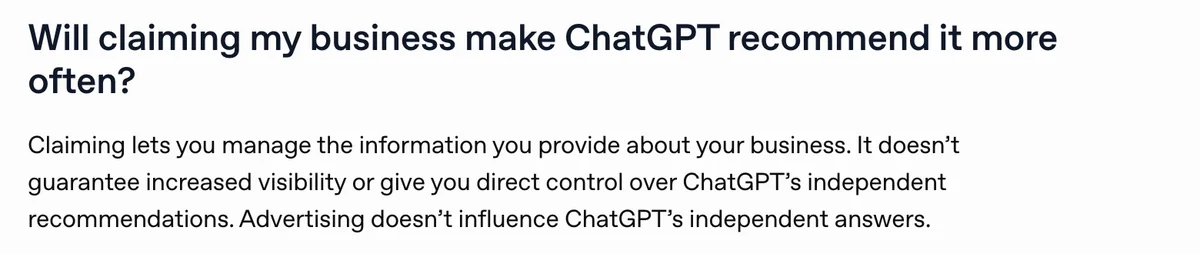
Claiming gives you control over the details you supply: your website, description, category, logo, policies and a cover photo. OpenAI reviews each change before it goes live. ChatGPT still draws on other sources when it answers questions about you.
That’s our advice too. A claimed profile doesn’t guarantee more recommendations. The details AI already reads about you, on your website, your Google Business Profile and the online travel agencies (OTAs) you sell through, carry the weight.
Two cautions before you claim:
- Check eligibility. OpenAI says availability “depends on the business’s location and type”, and that, for now, local stores and restaurants claim only existing US listings. If Business Hub won’t let you claim yet, every check below still applies.
- Check your details before the identity step. OpenAI uses Persona to verify your identity. If Persona approves a new profile, OpenAI publishes it automatically. OpenAI says its support team is unable to delete, unpublish or hide a published profile as part of a setup or ownership request. Get the name, website and description right first.
What to check first
Start with the public details ChatGPT reads, because those decide what it says about you.
- Ask ChatGPT about your business. Use the questions your guests ask: price, times, pick-up, age limits, dog friendly. Write down every wrong detail and which source ChatGPT cites for it.
- Make your details match everywhere. Check your business name, address, phone, hours, prices and booking link. They should read the same on your website, Google Business Profile and every OTA listing. As our post on whether AI uses OTAs or your website explains, conflicting details mean AI won’t recommend you with confidence.
- Put the facts on your website as text. Prices, times and conditions locked in a PDF brochure or an image aren’t readable to AI. Plain text on the page is.
- Check your robots.txt. Open yourwebsite.com.au/robots.txt. If it blocks OAI-SearchBot, OpenAI says your site won’t be shown in ChatGPT search answers, apart from navigational links.
- List your business where ChatGPT looks. A September 2026 Peec AI analysis found ChatGPT search draws on OpenAI’s own index and outside providers. Google, Bing, Yelp and Tripadvisor are among them. Our guide to Apple Maps and Bing Places covers what that means and has the steps.
- Fix the page people land on. Price, times and a booking button near the top. A warm visitor shouldn’t have to hunt.
- Ask guests how they found you. Add ChatGPT, Gemini and Claude to the “How did you find us?” question on your booking or contact form. Our post on choosing between ChatGPT, Gemini and Claude tells how one member got two bookings in a day from guests who found them in ChatGPT. Business Hub never shows you that. Your form does.
Not sure where you stand? The Free AI Readiness Score scans your website and emails you the results.
A worked example: a kayak hire business
Hypothetical example: a kayak hire business on a river in regional Queensland claims its profile. After a few weeks, Business Hub shows 210 mentions and 6 website clicks.
The owner asks ChatGPT, “Where do I hire a kayak for a couple of hours on a weekday?” ChatGPT names the business and gives the old summer hours. The website changed them in April. The Google Business Profile and one OTA listing never did.
The discovery topics read “family kayaking” and “river wildlife”. Those match the business. The topics aren’t the problem. The hours are.
The owner fixes the hours on the Google Business Profile and the OTA listing. The timetable moves out of a PDF onto the hire page. ChatGPT goes on the booking form’s “How did you find us?” list. A month later the owner asks ChatGPT the same question. The answer now gives the right hours. Two bookings that month tick “ChatGPT”.
The click count barely moved. The answer travellers see is now right, and the owner knows ChatGPT is sending bookings.
Frequently Asked Questions
Is a big gap between ChatGPT mentions and clicks a problem?
Not on its own. For a local business, Business Hub counts a mention each time ChatGPT shows your business. The person doesn’t have to open your listing or visit your website. The gap is a problem when ChatGPT describes you wrongly, the discovery topics don’t match what you sell, or visitors who do click don’t book.
Is ChatGPT Business Hub open to Australian tourism operators?
OpenAI says availability depends on the business’s location and type. Its help page says that, for now, local stores and restaurants claim only existing US listings. Open Business Hub from the sidebar in ChatGPT and search for your business to see what it offers you.
Why is my mentions number blank in Business Hub?
A blank number doesn’t mean nobody saw you. OpenAI gives three reasons for a blank metric: activity hasn’t reached the reporting threshold, data is still being collected, or reporting is unavailable. If it stays blank, OpenAI suggests contacting OpenAI Support.
Does Business Hub show me what people asked ChatGPT about my business?
No. Business Hub shows discovery topics, which are common themes in the answers that mentioned you. OpenAI says businesses don’t receive individual prompts or conversations. To see what ChatGPT says, ask it your guests’ questions yourself.
Do clicks from ChatGPT show up in Google Analytics?
The clicks do, as visitors to your website. Our AI traffic tracking guide explains that GA4 counts only the people who click through. Travellers who read the answer and book by phone or through an OTA never appear, so ask guests how they found you.
Conclusion
Mentions count appearances. Clicks count visits. For a tourism business, expect the first number to dwarf the second. This week, ask ChatGPT your guests’ questions and fix every detail it gets wrong at the source. Then add ChatGPT to your “How did you find us?” question.
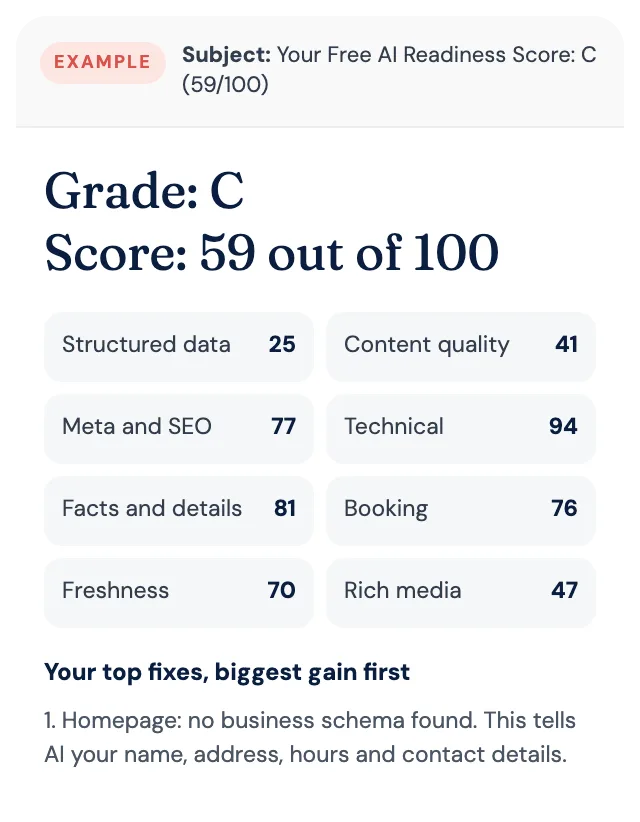
Free AI Readiness Score
How well does AI read your website?
Get your grade, a score out of 100 and your top fixes, by email. Free for tourism operators. No login and nothing to install.