Do you need to change your privacy policy because of AI? From 10 December 2026, some Australian businesses must. Most small tourism operators are not legally required to, but every operator who puts customer details into AI tools should update the policy anyway. Here is who the new rule covers and what counts as an AI decision. Then a fast way to check your policy with your AI agent.
- What changes on 10 December 2026?
- Does the new rule apply to a small tourism business?
- Which AI uses count as a decision about a customer?
- Why update your privacy policy if the rule does not cover you?
- How to check your privacy policy with your AI agent
What changes on 10 December 2026?
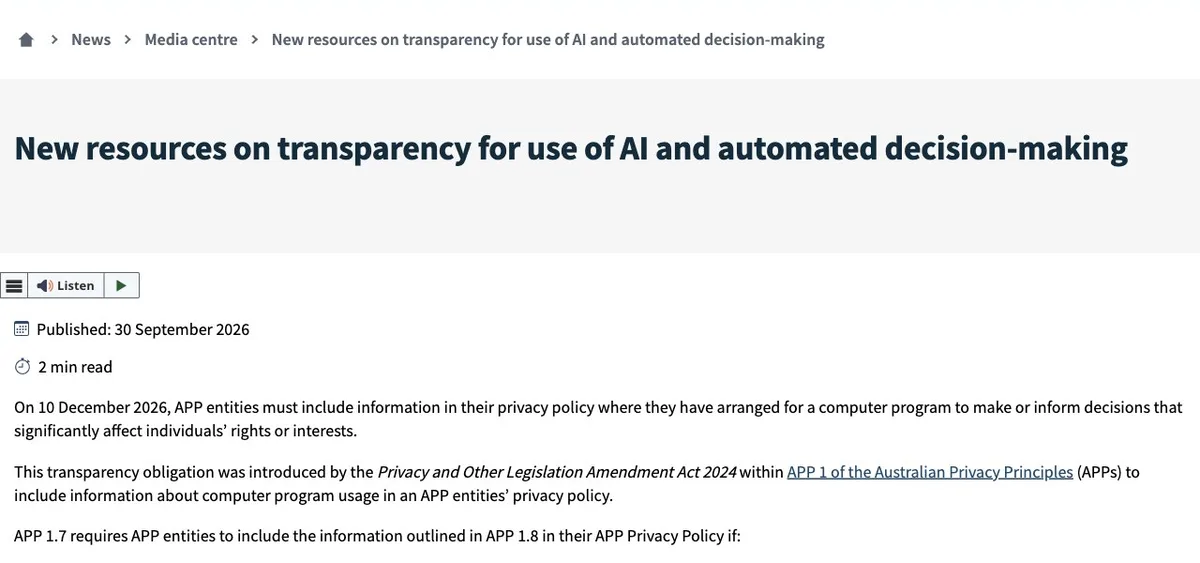
From 10 December 2026, a business covered by the Privacy Act must explain in its privacy policy when software makes decisions about people. The rule sits in Australian Privacy Principle (APP) 1, in new clauses 1.7 to 1.9. The Privacy and Other Legislation Amendment Act 2024 added them, with a two-year lead time.
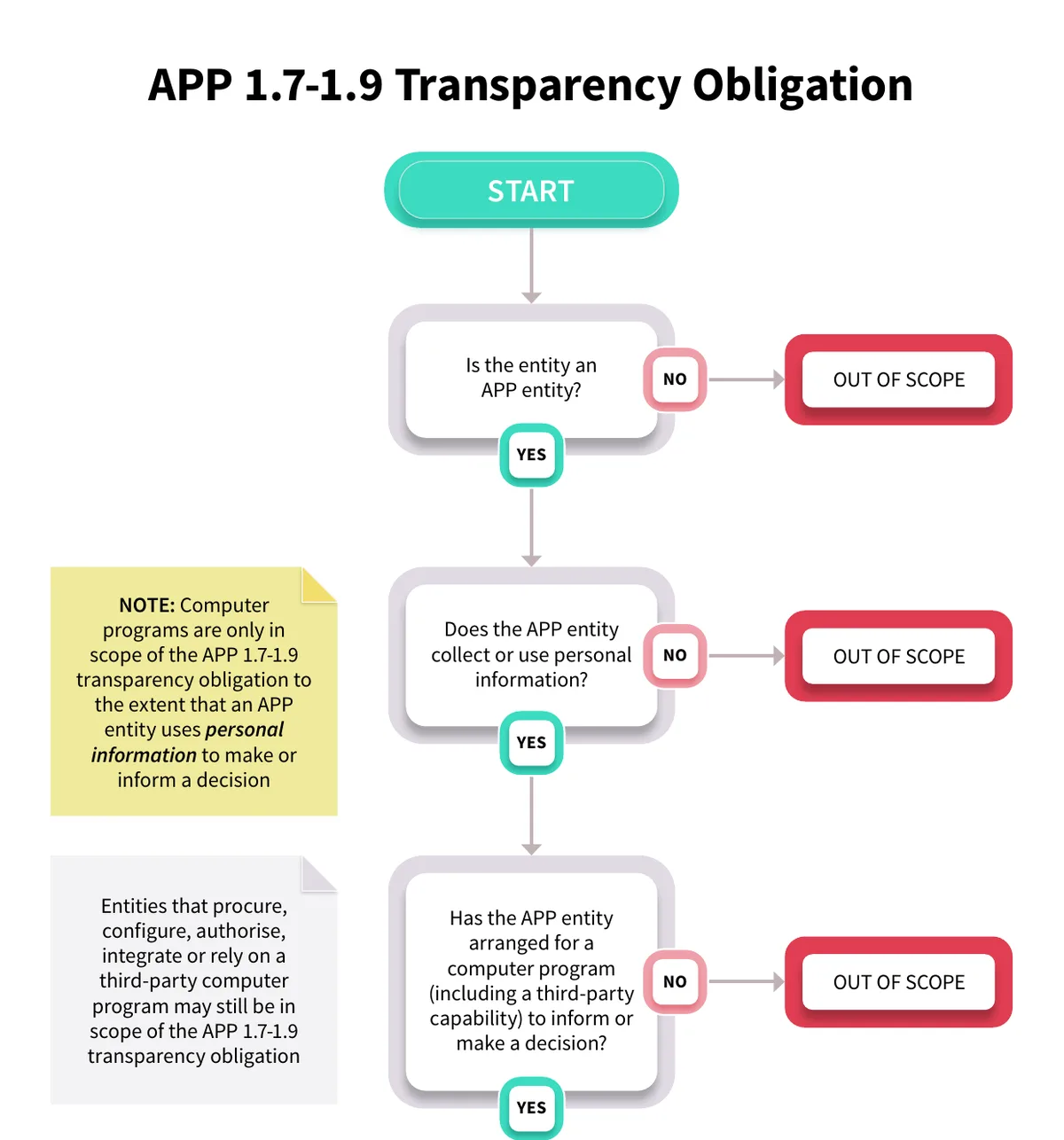
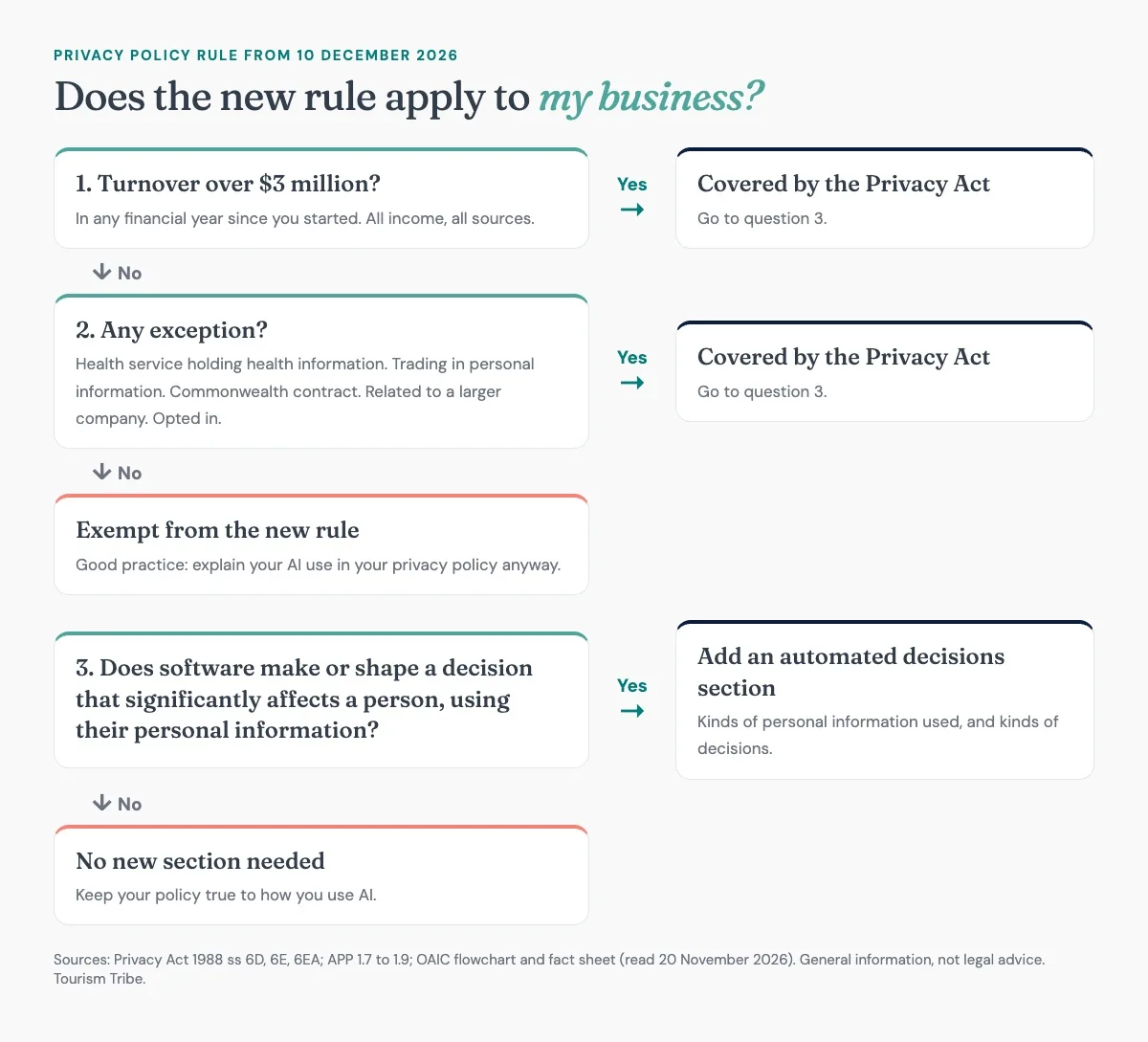
The rule applies when three things are true:
- The business has arranged for a computer program to make a decision, or to do something “substantially and directly related” to making it.
- The decision could reasonably be expected to significantly affect a person’s rights or interests.
- The program uses that person’s personal information.
When all three apply, the privacy policy lists the kinds of personal information the program uses. It also lists the kinds of decisions the program makes on its own, and the kinds it helps a person make.
The Office of the Australian Information Commissioner (OAIC) published a fact sheet, a flowchart and updated APP guidelines on 30 September 2026. Two points in them matter for operators. First, generative AI tools, chatbots included, count as a computer program. Second, a decision stays in scope “even where a computer program output does not replace the entire decision-making process or is subject to human review.”
The Act also adds APP 1.7 to the provisions the OAIC enforces with infringement notices and compliance notices. For a covered business, a missing section is a real compliance gap.
Does the new rule apply to a small tourism business?
For most small tourism operators, no. The Privacy Act does not cover a “small business operator”, and the new rule binds only businesses the Act covers. The OAIC’s flowchart for the rule starts with one question: is the business covered? A “no” ends at “out of scope”.
A business is a small business when its annual turnover for the previous financial year is $3 million or less. Turnover counts all income from all sources. The exemption is lost, whatever the turnover, if the business:
- has had a turnover over $3 million in any financial year since it started
- provides a health service and holds health information
- sells or pays for personal information, for example a mailing list swap, without consent
- delivers services under a Commonwealth contract
- is related to a larger company the Act covers
- has opted in to the Privacy Act
Wellness and spa operators, take note. The Act defines a health service as an activity intended to assess, maintain or improve a person’s physical or psychological health. If that describes part of your business, check your position with a lawyer.
The exemption is under review. In 2023 the Australian Government agreed “in-principle” to remove it, but only after an impact analysis, support for small business and consultation. The Attorney-General’s Department says it is developing draft provisions. As at 20 November 2026, the law has not changed.
Which AI uses count as a decision about a customer?
A decision counts when software decides something that matters to a person, or hands you a recommendation you rely on. Writing a social post is not a decision about anyone. Refusing a booking is.
The OAIC lists the kinds of decisions it considers in scope. Its list includes personalised pricing by online retailers for significant goods, recruitment software that sorts candidates, and programs that approve or reject loan applications. None of its examples is about tourism, so the lists below are our reading of the guidance, not the OAIC’s words.
Tourism uses that likely need the new section, for a covered business:
- prices set from a customer’s own details, such as location, device or booking history
- bookings refused, held or cancelled by a fraud or risk score
- software that screens or ranks job applicants
- an online health or fitness questionnaire that decides who joins an activity
Tourism uses that likely do not:
- AI writing your social posts, emails or review replies
- a chatbot or voice agent that answers questions and takes bookings, without deciding who gets one
- demand-based pricing that shows every customer the same price, because it uses no personal information
Here is a hypothetical example. A reef dive operator with $4 million turnover uses an online medical questionnaire. When a guest ticks “asthma”, the booking system holds the dive and asks for a doctor’s clearance. A staff member checks every flag before the dive day.
That is a computer program making a decision with health information, and a human review does not take it out of scope. The operator adds a short section to the privacy policy. It names the health information the questionnaire uses and the decision it makes. The OAIC’s advice for anyone unsure: “take a cautious approach and include information”.
Why update your privacy policy if the rule does not cover you?
Because the OAIC recommends it, and because your customers read it. The OAIC’s small business page tells exempt businesses: “As a matter of best practice though, we recommend you protect any personal information you hold.” It also suggests small businesses consider opting in to the Privacy Act.
The OAIC’s guidance on commercially available AI products adds three points every operator should apply:
- Explain your use of AI in your privacy policy.
- Make sure a public chatbot is clearly identified as AI.
- Do not put personal information, especially sensitive information, into publicly available AI tools.
Privacy worries hold operators back too. In our State of AI in Tourism 2025 survey, 33% of respondents named privacy concerns as a barrier to using AI. A clear, honest policy answers that worry for your team and for your guests.
There is a practical reason as well. If the exemption goes, a policy that already covers your AI use needs only a check, not a rewrite. For the security side of the same job, read how to connect AI safely to your tourism business and how to stop your AI following orders from anyone who emails you.
How to check your privacy policy with your AI agent
The fastest check is to give your AI agent the checklist and your policy, and let it draft the fixes for you to approve. Tourism Tribe members have a ready-made playbook for this in Member resources: “Privacy policy check for your AI agent”.
It works in five steps:
- Answer six questions only you know: your turnover, any exceptions, your AI tools, the customer information that goes into them, any automated decisions, and where your suppliers store data.
- Paste the playbook, your answers and your privacy policy into ChatGPT, Claude or Gemini.
- Your agent marks each checklist item Present, Missing or Unclear, quotes your policy, and drafts wording for each gap.
- You read the draft and fix anything that is not true for your business. Then you update the policy on your website, with a new “last updated” date.
- You run it again when you add an AI tool, or once a year.
The checklist starts with what every privacy policy covers under APP 1.4. That means the kinds of personal information you hold, how you collect and store it, and why you use and share it. It also covers how people access and correct it, how to complain, and whether it goes overseas. Then it adds the automated decisions section and the OAIC’s AI good practice.
If you already run an AI operating system for your tourism business, save the playbook in that folder. Add one line to your AGENTS.md file so your agent follows it every time it touches the policy. The same approach works with the AI personal assistants and agents many operators now use.
Frequently Asked Questions
Do small tourism businesses have to follow the Privacy Act?
Most do not. A business with annual turnover of $3 million or less is exempt, unless an exception applies, such as providing a health service or trading in personal information. The OAIC still recommends exempt businesses protect the personal information they hold.
Does a website chatbot count as an automated decision?
A chatbot that answers questions does not decide anything about a person, so on our reading it does not trigger the new section. A chatbot that refuses, approves or prices a booking from the customer’s own details is different. The OAIC also recommends every public chatbot tells people it is AI.
Does dynamic pricing need to go in my privacy policy?
Only if a covered business sets prices from a customer’s personal information. Demand-based pricing that shows every customer the same price uses no personal information, so the new rule does not reach it. The OAIC lists personalised pricing of significant goods as an in-scope example.
What if a person checks every decision the AI makes?
Human review does not take a decision out of scope on its own. The OAIC fact sheet says a decision stays in scope even where the program’s output is subject to human review. Extensive human oversight and control changes the picture, so record how your team checks the output.
Is the small business exemption being removed?
Not yet. The Government agreed in principle in 2023 to remove it, after an impact analysis and support for small business. The Attorney-General’s Department says it is developing draft provisions, and the law has not changed as at 20 November 2026.
Conclusion
The 10 December rule binds covered businesses, not most small operators. The fix is the same for both. Your privacy policy says how you use AI and names any decision your software makes about people. Give your AI agent the checklist and your policy this week, and approve the draft it sends back.
This article is general information, not legal advice. If your turnover is near $3 million, or you handle health information, talk to a lawyer.
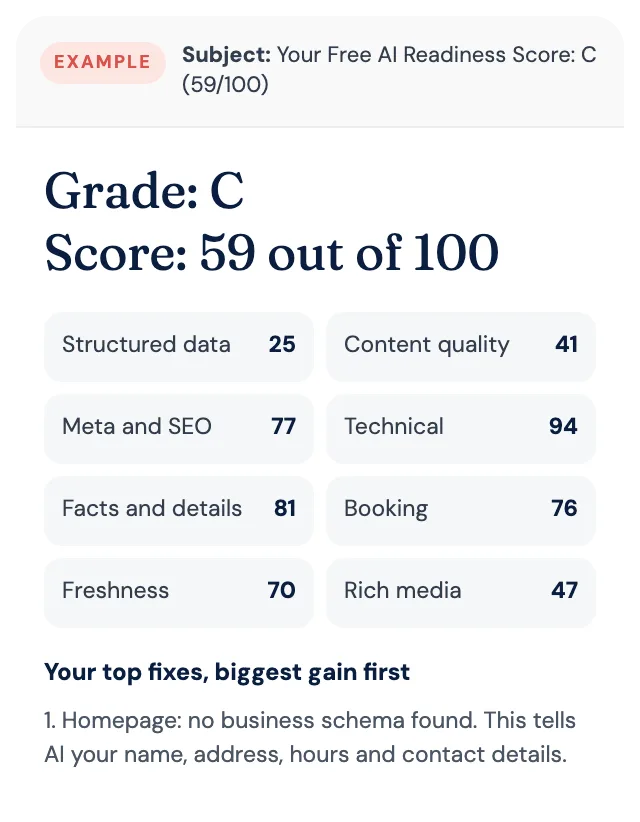
Free AI Readiness Score
How well does AI read your website?
Get your grade, a score out of 100 and your top fixes, by email. Free for tourism operators. No login and nothing to install.