
Google has published its first official guide on AI search optimisation. For tourism operators who have been trying to work out what actually moves the needle, and what is just noise, this is the document to read. Here is what it says, and what it means for your business.
The guide matters because the advice online has been contradictory. One blog tells you to create special AI files. Another says to chop your content into fragments. A third sells you a “GEO audit” to chase mentions across the web. Google has now told everyone, in writing, which of these are worth your time. Most are not. We have read the full guide and pulled out what applies to a small tourism business.
What the guide actually says
Google’s AI features, AI Overviews and AI Mode, are built on top of the same core search ranking systems you already know. Google describes them as “rooted in our core Search ranking and quality systems”. The AI does not crawl the web fresh for every answer. It reads the pages Google already trusts and indexes, then writes a response from them. The technical name is retrieval-augmented generation, or RAG. Google calls it “grounding”.
The practical takeaway is short. If your pages do not rank in normal Google search, they will not appear in AI answers either. There is no separate AI back door. The AI is reading the same index.
That makes the foundation standard SEO. Google’s guide is explicit that “SEO best practices continue to be relevant”. Three things carry the weight: unique and useful content, a technically sound site, and pages that are crawlable and indexed. Nothing exotic. If you have been doing the basics well, you are already most of the way there. We covered this groundwork in our overview of how AI search is changing tourism marketing.
Your Google Business Profile and structured data still matter. Not because of an AI trick, but because they make your business machine-readable. Google says products like Google Business Profile “can help your products and services to be visible in both AI responses and other Google Search results”. A complete, accurate profile gives the AI clean, structured facts about you to draw on.
What you do not need to do
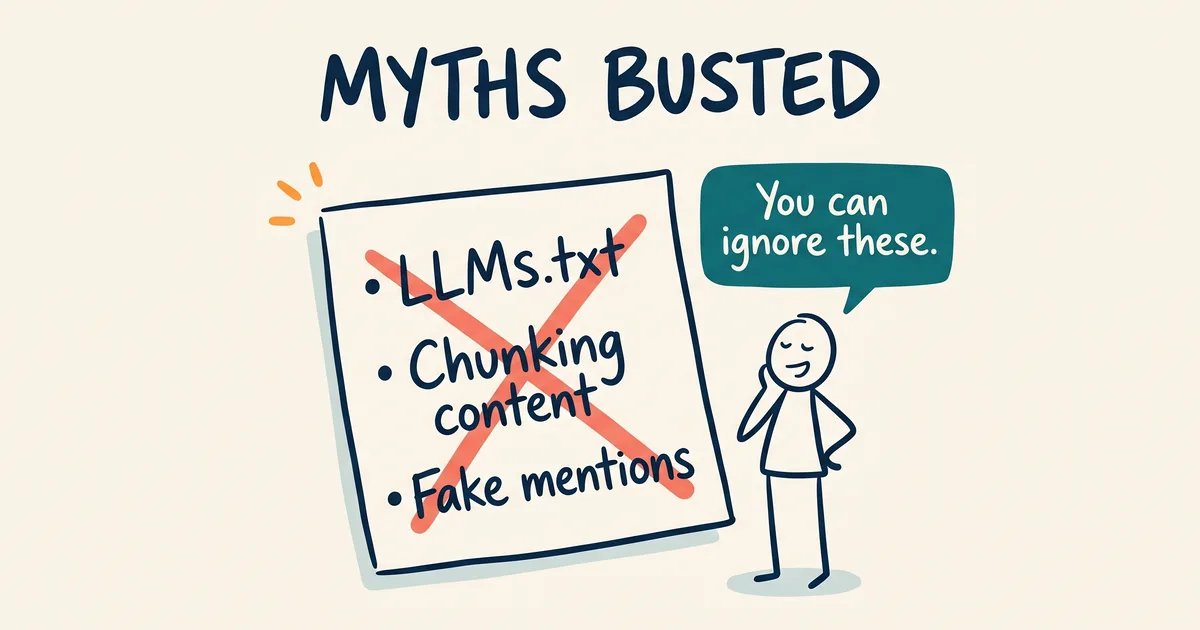
This is the part worth printing out. Google explicitly says these popular “AI optimisation” tactics are not needed and will not help.
- LLMS.txt files. You do not need to create any special AI text file or markdown document for your site. Google’s exact words: “You don’t need to create new machine readable files, AI text files, markup, or Markdown to appear in generative AI search.” Skip it.
- “Chunking” your content. There is no need to break your pages into tiny fragments for the AI. Google says “there’s no requirement to break your content into tiny pieces for AI to better understand it.” Its systems read meaning across a whole page.
- Rewriting content just for AI. You do not need a special writing style aimed at machines. The AI understands synonyms and intent, so you do not have to stuff in every long-tail phrasing a traveller might type.
- Chasing inauthentic mentions. Paid or fake mentions scattered across the web will not move you up. Google’s wording: “seeking inauthentic ‘mentions’ across the web isn’t as helpful as it might seem.” Its systems filter spam.
- Special schema just for AI. Schema markup is still good SEO practice. But Google states plainly that “structured data isn’t required for generative AI search.” There is no secret AI schema to add.
If a tool or consultant is selling you any of the five above as the key to AI search, you now have Google’s own guide to point at.
What does move the needle
Four levers do the real work, and they are the same ones good operators have always had.
Non-commodity content
This is Google’s own framing, and it is the most important idea in the guide. Commodity content is the generic stuff anyone could write. “Seven tips for tourism operators.” A summary of advice already sitting on a hundred other sites. Non-commodity content is the thing only you could write, drawn from running your business, in your location, for your guests.
Google puts it like this: “a first-hand review provides a unique perspective based on personal experience, whereas a summary of existing content simply restates information already available elsewhere.” A post titled “What we learned running boat tours in the Whitsundays through cyclone season” cannot be copied by anyone else. That first-hand point of view is what the AI favours.
Your Google Business Profile
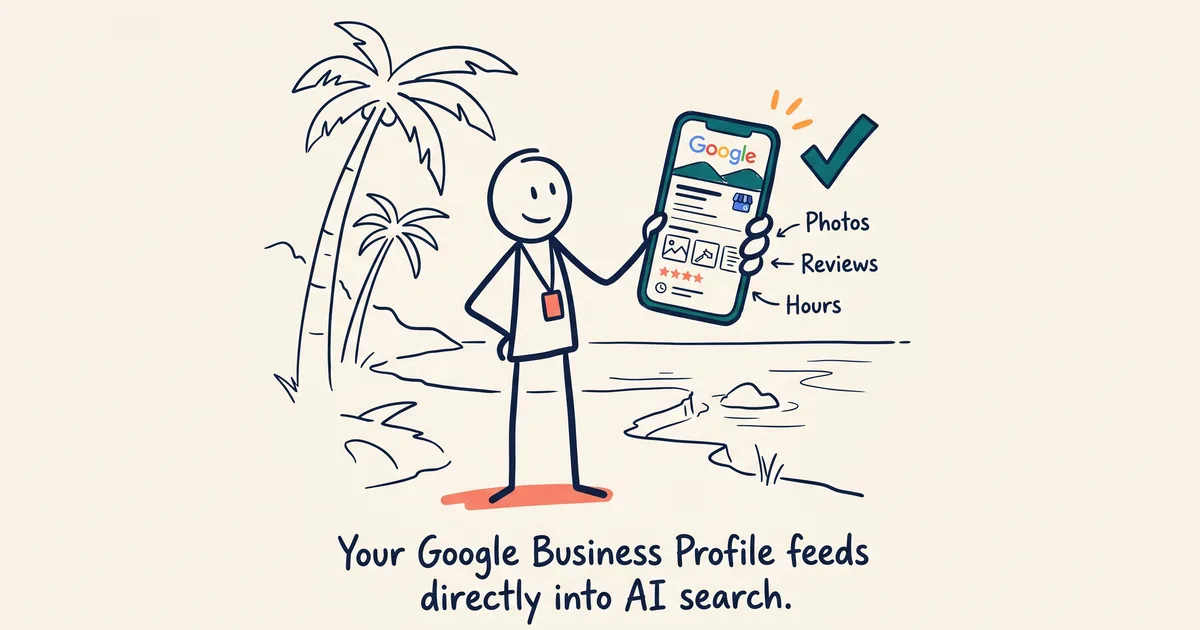
Complete, accurate, with recent photos and replies to reviews. Your profile is a structured, machine-readable record of your business that feeds straight into Google’s AI. It is free, and for most operators it is the single highest-return hour you can spend this month. Our Google Business Profile course walks through every field.
FAQs that answer real questions
A good FAQ page works for AI for the plainest reason. It answers what people actually ask, which is exactly what the AI is trying to do when it builds a response. There is no trick to it. Write down the questions guests email you every week, and answer them in clear language. We have a guide on how to write FAQs for tourism websites if you want a structure to follow.
Technical basics
Your pages must be indexed and crawlable. Google’s guide is blunt that pages “must be indexed and eligible to be shown in Google Search with a snippet.” If Google cannot read your page, neither can its AI. Check this in Google Search Console.
Query fan-out, and why supporting posts help
Here is a concept worth understanding, because it explains why a cluster of related posts beats one thin page. When someone asks “what should I do in the Daintree for 3 days?”, Google’s AI does not stop at that one question. Behind the scenes it generates several related sub-queries: “family activities near the Daintree”, “best time to visit the Daintree rainforest”, “Daintree accommodation options”. Google calls this query fan-out.
Pages that answer those background questions are more likely to be pulled into the final answer. This is why topic clusters and supporting blog posts work. Each one quietly serves a sub-query the AI is asking on the side. The same logic applies to destinations and regions, which we unpack in our 15 FAQs on AI search for DMOs.
One warning from Google, in its own words. Do not create “separate content for every possible variation”, because that “violates Google’s scaled content abuse spam policy”. Quality over coverage. Write fewer, better posts that each say something real, not a thin page for every keyword.
What is coming: agentic experiences
Google calls out the next frontier in the same guide. AI agents are autonomous systems that perform tasks for a person, like booking a reservation or comparing options. When one visits your site, it does not just read the words. Google says these agents work by “analyzing visual renderings (like screenshots), inspecting the DOM structure, and interpreting the accessibility tree”. Discovery is only half the story: the booking itself is now moving into Google through its new Universal Cart.
This guide is one piece of a wider rebuild. For the full picture, read the four shifts Google announced at I/O 2026 and what they mean for the visitor economy.
You do not need to act on this yet. The preparation is the same hygiene that helps human visitors: keep your site technically clean, well-structured, and accessible. More guidance will come as this matures. If you want to look ahead, we cover the shift in detail in our AI Playbook.
What to do this week
- Check your Google Business Profile is complete and has recent photos.
- Make sure your key pages are indexed, using Google Search Console.
- Review your FAQ pages. Are they answering real questions in plain language?
- Make your next blog post a specific, first-hand story from your business, not a generic tips list.
- Do not waste time on LLMS.txt files or content chunking.
If you want to build these habits properly, our AI Foundations course and SEO short course cover the groundwork in order. Both are written for operators, not technical staff and are included in our AI Enablement Plans.
Source: Google’s official AI features and your website guide, Search Central, 2026.
Frequently asked questions
Does Google’s AI search work differently from regular Google search?
Not as differently as you might think. Google’s AI Overviews and AI Mode are built on top of the same core ranking systems as regular search, using a technique called retrieval-augmented generation (RAG). Google retrieves trusted pages from its index, then synthesises an answer from them. If your pages don’t rank, they won’t appear in AI answers either.
Do I need to create an LLMS.txt file for my tourism website?
No. Google’s official guide explicitly states you don’t need to create any special AI text files, markup, or markdown to appear in AI search. LLMS.txt files are not treated specially by Google.
What is non-commodity content and how do I create it for my tourism business?
Non-commodity content is content only you could write — based on your direct experience running your business, in your specific location, for your specific guests. A generic tips for visiting the reef article is commodity content. A post about what first-time snorkellers always get wrong on the Great Barrier Reef, based on 10 years of guiding, is non-commodity. The more specific and experience-based your content, the more Google’s AI systems favour it.
Is SEO still worth doing if AI is taking over search?
Yes. Google’s guide makes this explicit – AI features are built on SEO foundations. Pages that rank well in Google search are the ones that appear in AI Overviews and AI Mode. Standard SEO practice (unique content, technical structure, Google Business Profile, schema) is still the right investment.
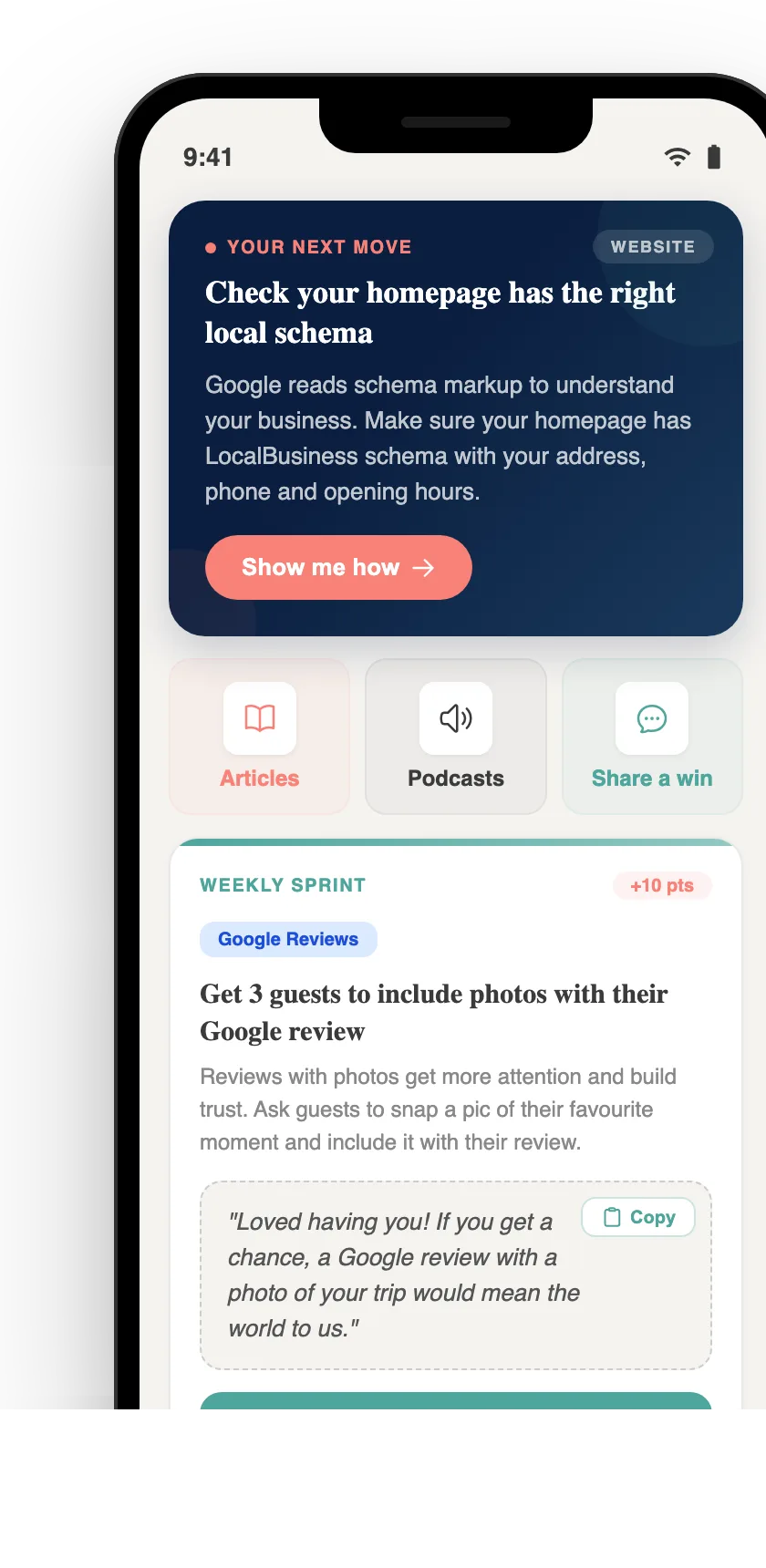
Your free AI marketing coach, right in your pocket
The free Pocket Rocket app gives you a personal AI marketing coach, website audit, weekly action plans and 5-minute tips. Built for tourism operators.