

The examples below are from businesses who have followed our blogging guidance and are seeing great SEO and AI benefits from their efforts.
Top Marks – Walk 91
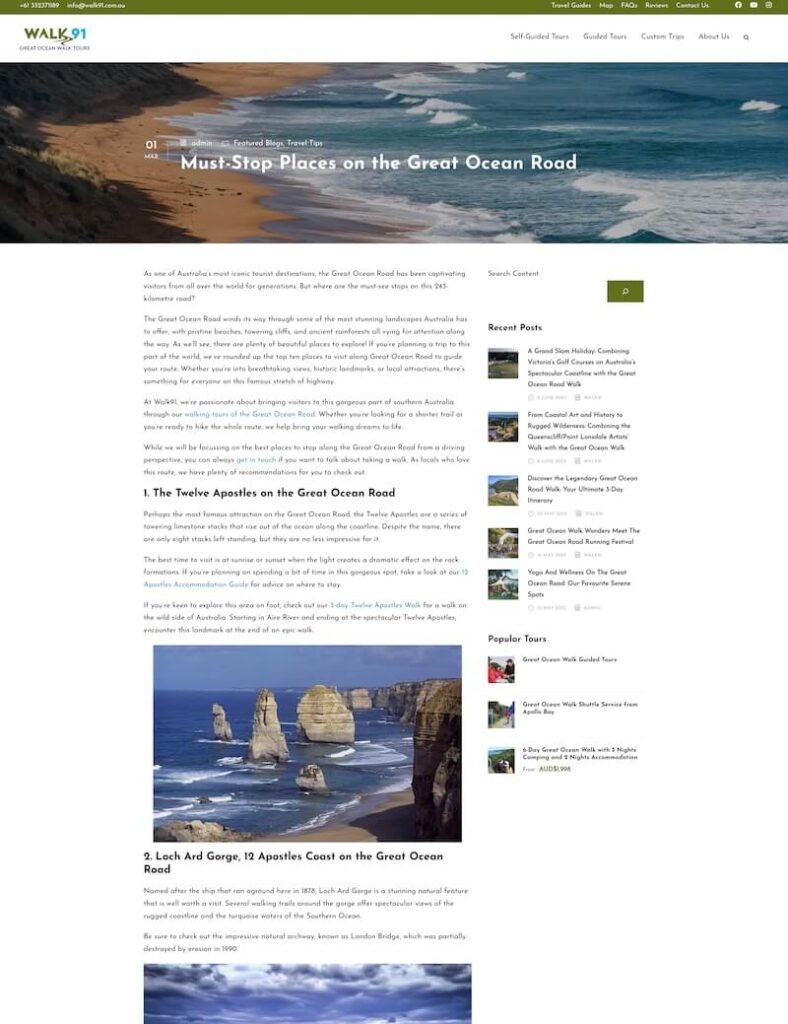
When it comes to exemplary tourism blogging, Walk91’s blog stands out as a paragon of excellence. Their content masterfully blends practical travel advice with rich storytelling, offering readers a comprehensive guide to the Great Ocean Walk and its surroundings.
From detailed itineraries and seasonal tips to insights on local wellness spots, their articles are both informative and engaging. This depth and quality not only serve their audience well but also align perfectly with the principles of Generative Engine Optimisation (GEO), enhancing their visibility in AI-driven search experiences like Google’s SGE. Read more about how to optimise your tourism website blog for Google’s AI results here.
Green Pedal blog post page
Owners of Green Pedal have done an amazing job so far in creating content that adds value to their target audience, increases brand awareness through collaboration and positions them as experts in the region of Echuca.
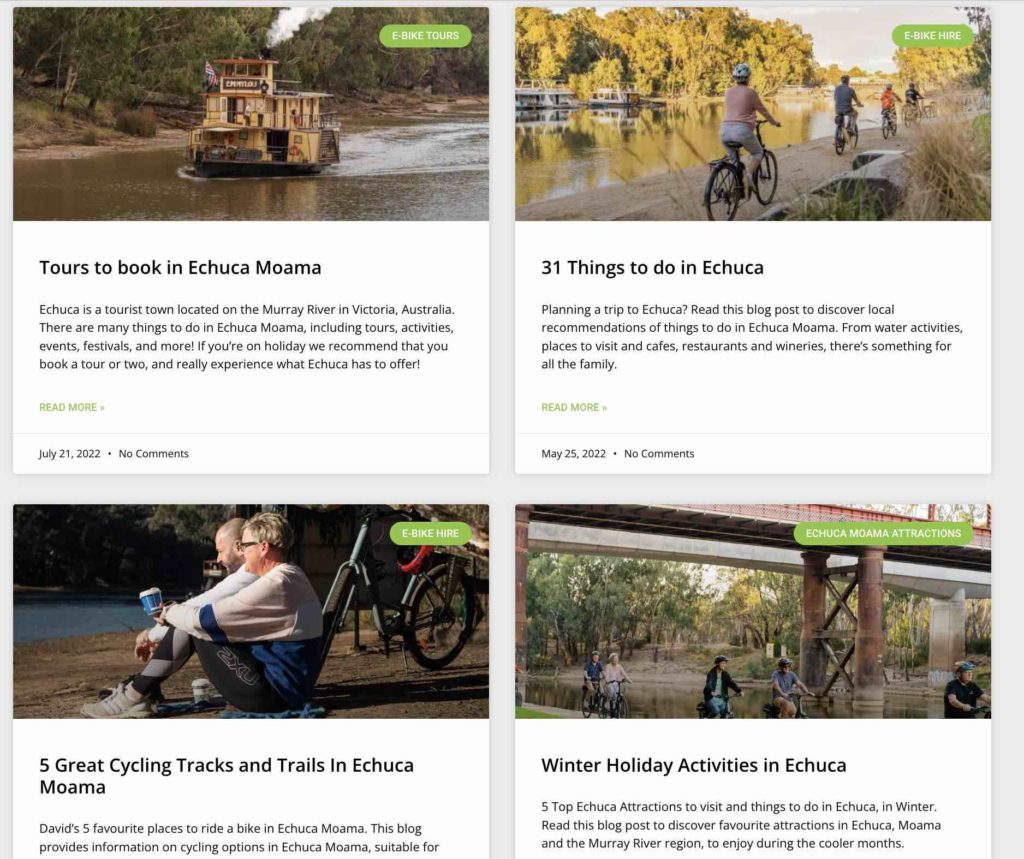
Blog post page for Green Pedal
1770 LARC! Tours blog post page
This business does a great job of consistently updating its blog post page with great updates, events, and educational posts for its consumers.
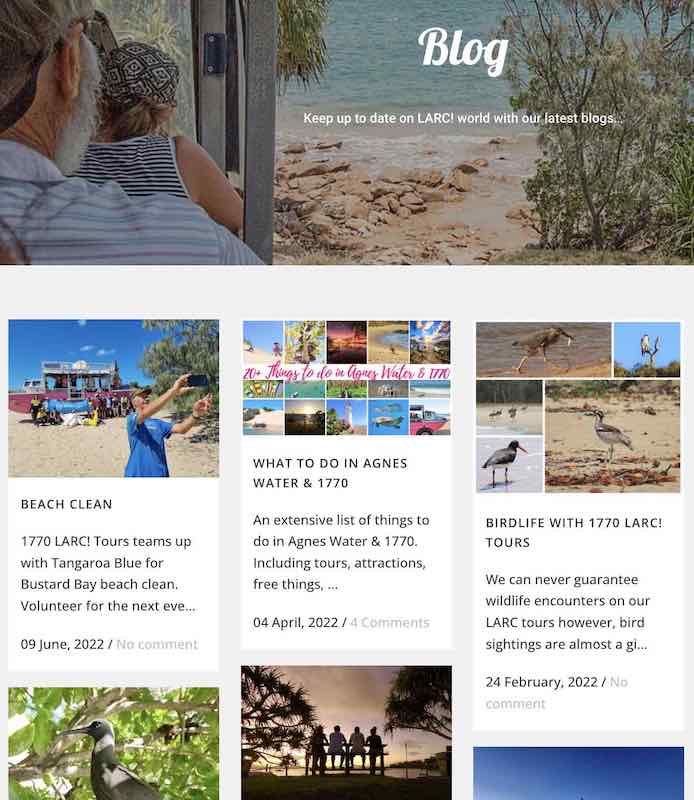
Blog post page for 1770 LARC! Tours
Why a current blog helps AI trust your site
A dated, regularly updated blog is a freshness signal. AI assistants and search both favour content that looks current and active. A site whose most recent post is from years ago can read as abandoned, which makes an assistant less likely to trust it and surface it.
Recent, specific articles also give AI fresh material to quote when answering travellers, and they let you cover the exact seasonal questions people ask. Visible dates matter here. Without them, AI leans on weaker signals like your sitemap to judge whether a post is current, so an undated blog loses some of the benefit even if you post often.
What a healthy blog looks like
Aim for at least six content-rich posts, with real text and images rather than thin entries. Keep at least one published in the last six months, put a clear date on every post, and add one good post each quarter. Make the blog a top-level menu item rather than burying it in a sub-menu.
Frequently Asked Questions
How many blog posts do I need?
At least six genuine, content-rich articles, with at least one published in the last six months. Six thin posts do not count. Aim to add one good post each quarter to keep the section current.
Do dates on my posts really matter?
Yes. Visible dates tell AI and search that your content is current. Without them, an assistant falls back on weaker signals to judge freshness, so a post that is actually recent can lose the benefit.
What should I write about?
Things that genuinely help visitors: local guides, what’s on, seasonal tips, behind-the-scenes. These are also the topics travellers ask AI about, so a useful post can be quoted back in an answer.
My newest post is two years old, so is that a problem?
Yes. An old, quiet blog can read as an abandoned business. Publish something current, make sure the date shows, and set a recurring reminder to post at least once a quarter.
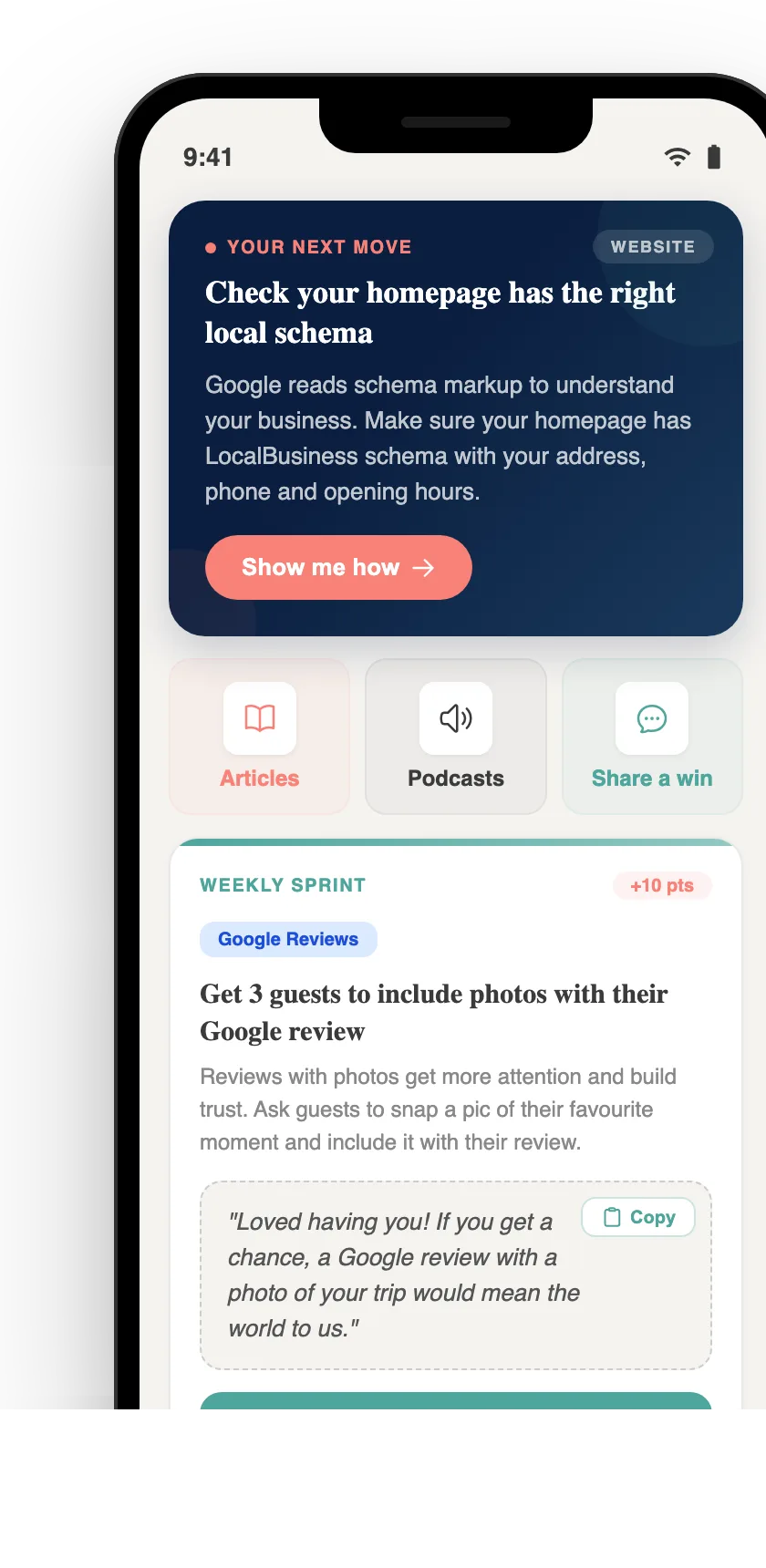
Your free AI marketing coach, right in your pocket
The free Pocket Rocket app gives you a personal AI marketing coach, website audit, weekly action plans and 5-minute tips. Built for tourism operators.