
Why Your AI Generated Content Sounds Like AI (And the Simple Fix)
March 30, 2026

Open ChatGPT and type “write me a caption about my whale watching tour.” If you haven’t trained the AI to know about your business, and more importantly your business ‘voice’ when writing content, you’ll probably get some rubbish about sunsets and unique experiences. The same output every other operator in the country gets. That’s because generic prompts produce generic output. Creating a voice DNA document is the fix: a one-page brief that tells the AI who you are, who your customers are, and how you want to sound in your written content before you ask it to write anything.
Quick links
- Why AI-generated content sounds generic
- What is a voice DNA document?
- What to put in your voice DNA document
- Where to store it so the AI always has it
- Does it work?
- Your next step
Why AI-generated content sounds generic
When you give AI a one-line prompt, it writes the average of everything it has read about your topic. Billions of words. None of them about your specific tour, your specific customers, or your voice.
The result is content that sounds like AI wrote it. Not because AI is the problem, but because you gave it nothing specific to work with.
Professional copywriters spend hours getting a brief before they write a word. Most people give AI a sentence and expect something that sounds human and on-brand. It will not.
What is a voice DNA document?
A voice DNA document is a written brief you give the AI before you ask it to write anything for you. Who you are. Who your customers are. How you want to sound. What you never want to say (think em dashes).
One A4 page. That is all it takes to stop getting generic output.
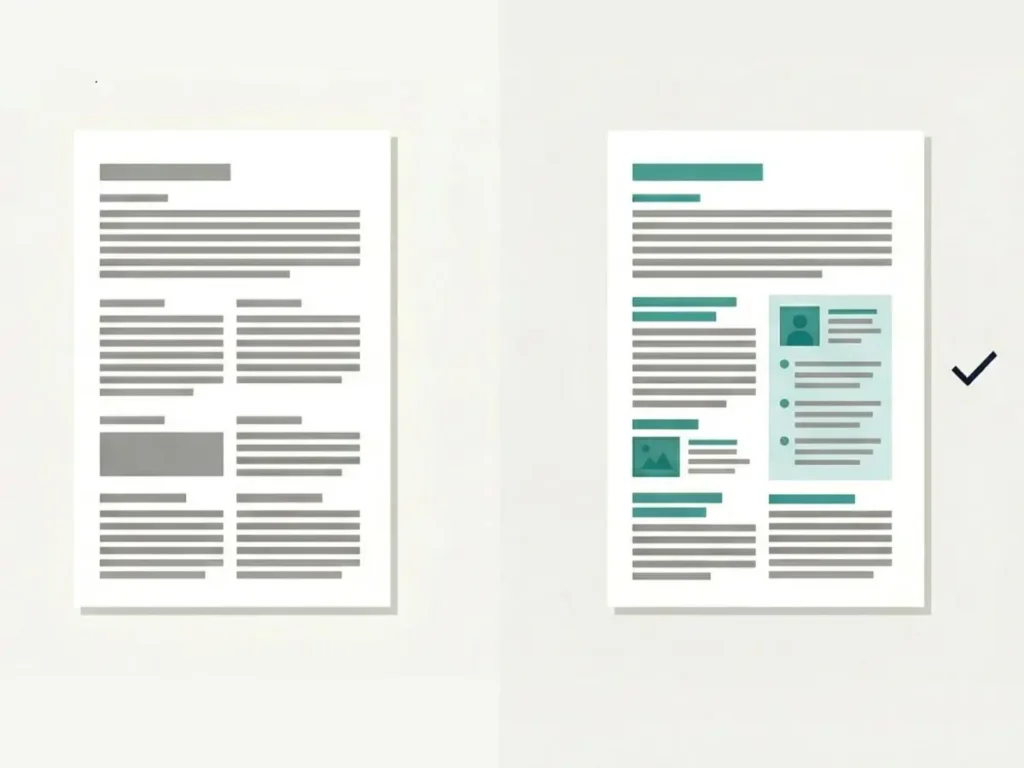
A contractor who receives your document three days in advance, with examples of writing you love and writing you hate, will produce something completely different to one who was provided with nothing. Same applies to AI. The briefing is everything.
What to put in your voice DNA document
Five things.
Your business in two sentences. Not a tagline. Specific. “Small-group walking tours in the Grampians for people who want to slow down and see something real” beats “tourism operator offering unique experiences.”
Your customer. Who books with you? What are they looking for? What words do they use when they describe it?
Your tone. Three or four adjectives, backed up with examples. “Warm but direct. We don’t use exclamation marks.” does more work than “friendly and professional.”
What to avoid. The words, phrases, and framings that feel wrong for your brand. This section often does more work than any amount of tone description.
Examples. Paste in two or three paragraphs of your best existing writing. An email you are proud of. A website section that sounds right. A caption that got a real response. Examples give the AI a specific idea of how you write, the words you use and the rhythm of your sentence structure.
Where to store it so the AI always has it
Your voice DNA document only works if the AI has it at the start of every session.
ChatGPT Projects solve this. Create a Project, paste your voice DNA document in, and every conversation you start inside that Project begins with the AI already knowing your business, no repasting or re-explaining required.
Google Gemini Gems work the same way. Set up a Gem with your document inside so every session starts with your context already loaded.
If you use multiple AI tools, keep the document in a Google Doc. Open, copy, paste. Ten seconds of effort and the output quality difference will be immediate.
Does it work?
Fabienne Wintle, Tourism Tribe co-founder, tested this on a GP’s website. The previous copywriter had produced content that read like every other medical practice in Australia. Fabienne loaded the GP’s voice DNA document into an AI tool and rewrote the same pages. The GP read it and said: that sounds like me.
Same tool but with a better brief produced a completely different, and much higher quality result for that business.
Your walking trail is not a generic walking trail and your customer is not a generic traveller so you need to stop asking AI to write as if they were.
Your next step
Write four paragraphs this week:
- who you are
- who your customer is
- how you want to sound
- what you want to avoid
- then add two examples of writing you like.
Load it into a ChatGPT Project or a Gemini Gem. Then ask the AI to write something you would normally write yourself. Compare the output to what you have been getting.
That gap is what you have been leaving on the table.
Want to see where voice DNA fits alongside AI search, content strategy, and the tools worth using? Read the AI in Tourism Playbook.
Want to get more out of AI for your tourism business?
Getting AI to sound like your brand is the first step. Tourism Tribe offers three ways to help further:
- GEO Assessment: find out how visible your business is to AI tools right now
- Digital Direction Plan: a personalised roadmap for your digital and AI strategy
- AI Enablement Plans: ongoing access to Tourism Tech Sessions, tools, and hands-on support
Frequently asked questions
What is a voice DNA document for AI?
A voice DNA document is a written brief you give an AI tool before asking it to write anything. It covers who you are, who your customers are, how you want to sound, and what to avoid. It gives the AI the context it needs to produce content that sounds like your business rather than a generic version of your industry.
How long does a voice DNA document need to be?
A single A4 page is enough. Cover your business in two or three sentences, describe your ideal customer, outline your tone and what to avoid, then paste in two or three examples of writing that sounds right. Starting short is better than not starting.
Does the same voice DNA document work in every AI tool?
Yes. The document is not tool-specific. Paste it into ChatGPT, Claude, Gemini, or any other AI tool at the start of a session. For tools that support persistent context, like ChatGPT Projects or Gemini Gems, you only need to set it up once.
What if I have no examples of my own writing to include?
Use whatever you have. An email you sent to a customer. A section of your website you like. A caption that got a good response. If you have nothing at all, find a piece of writing in a completely different industry that captures the tone you want and include it as a reference. The AI adapts from examples even when they are not about your business.
Does a voice DNA document work for video scripts and email, not just social media?
Yes. It works for any format because it is about your voice and context, not the format itself. A well-built voice DNA document improves AI output for social captions, email newsletters, website copy, and video scripts.
How often should I update my voice DNA document?
Update it when something meaningful changes: your audience shifts, your positioning changes, you launch a new product, or you notice the AI output drifting. Most businesses update theirs once or twice a year. Set a reminder after three months and check whether it still reflects how you want to sound.
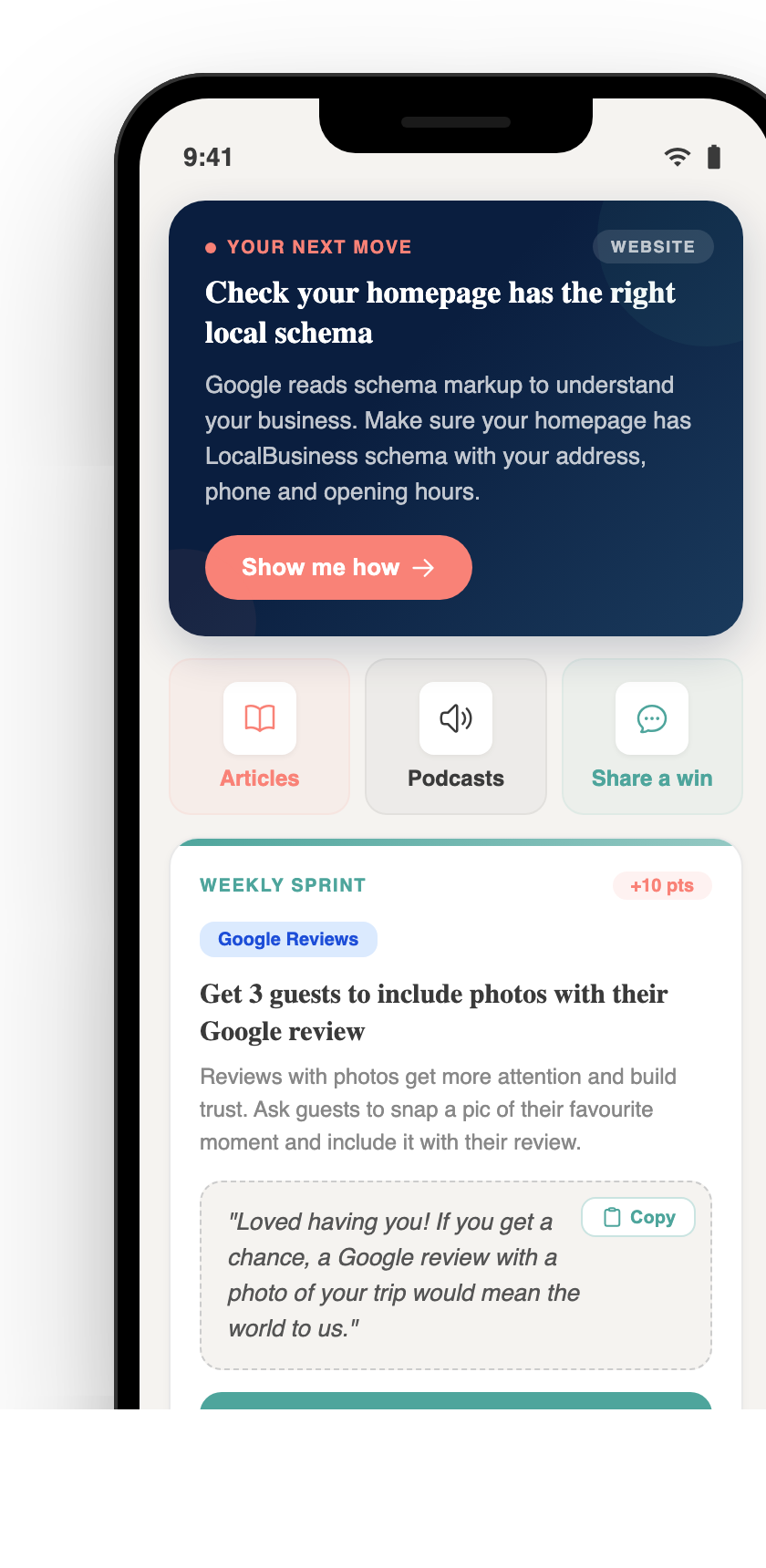
Pocket Rocket App — Free
Your free AI marketing coach, right in your pocket
The free Pocket Rocket app gives you a personal AI marketing coach, website audit, weekly action plans and 5-minute tips. Built for tourism operators.