
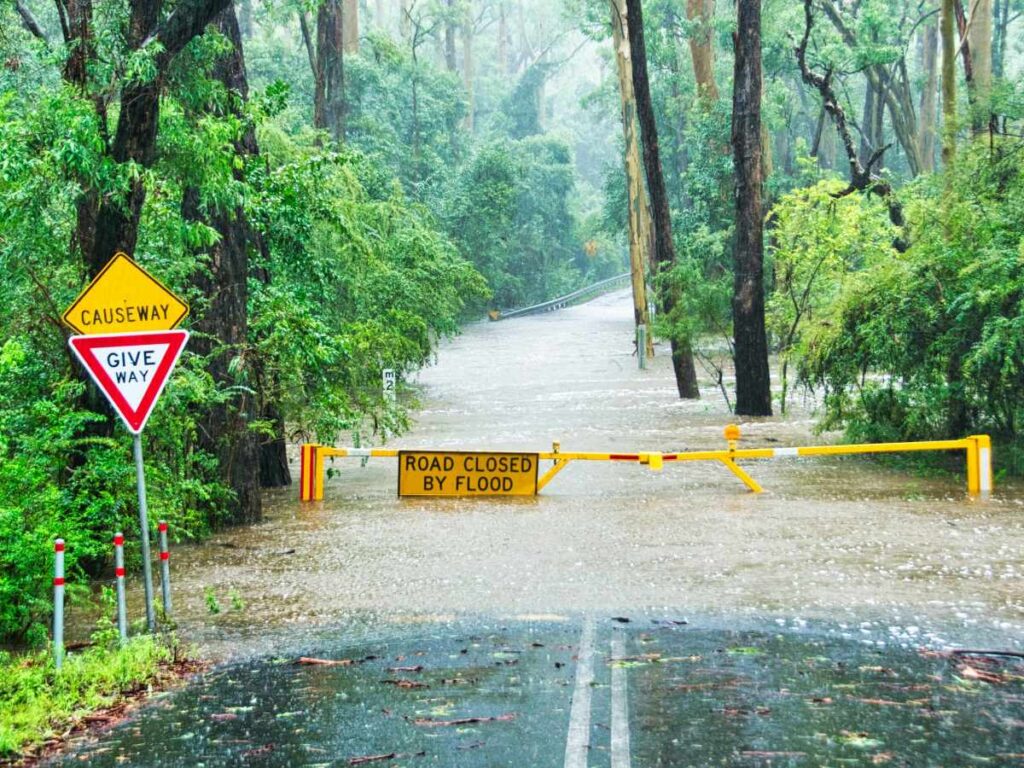
Over the last few years, the weather has thrown many curve balls to a number of tourism destinations both in Australia and around the world. We all know that during such disasters, the media love to share all those ‘click bait’ images, videos and stories that sell newspapers and online media and ensure the disaster is messaged at its worst and most widespread. I still remember all my European and Canadian friends ringing me during the Brisbane floods of 2011 as they had heard in the news that the whole of Queensland was underwater.
When a natural disaster hits a tourism region, the physical danger may pass quickly, but the damage caused by negative media coverage can linger for months or even years. Fires, floods, cyclones and extreme weather events often dominate headlines well beyond the actual impact zone. For tourism businesses, this creates a second crisis based on fear, misinformation and cancelled bookings driven by perception, not reality.
This guide is for tourism operators whose region is now safe, partially operational or fully open again but are still dealing with the fallout of exaggerated or outdated media reporting. It focuses on how to actively reset the narrative, rebuild traveller confidence and accelerate recovery.
If you are currently in the middle of an active emergency, start with our Tourism Crisis Communication Guide. If the sirens have stopped but the phones are still quiet, this is where your recovery communication truly begins.
If you’re not in crisis now but you know your region is vulnerable, use this article along with our Tourism Crisis Communication Guide, 7 essentials for crisis planning quick tips and our Crisis Management course to ensure you have the plans and templates ready to use if/when you need them in the future. Together, they form a simple path to be prepared for:
- During a crisis: what to do today if a disaster has just struck
- Recovery phase: what to do immediately after a crisis has hit (covered in this article) & post-disaster marketing tips
- Pre-planning: what to put in place so you’re not scrambling next time: quick tips & full course)
Visit our crisis management planning area for all resources on the topic.
Our story: the Agnes Water & 1770 experience
Just before Christmas in 2018, Central Queensland experienced unprecedented bushfires just outside of Agnes Water and 1770, the coastal town many of us proudly call home.
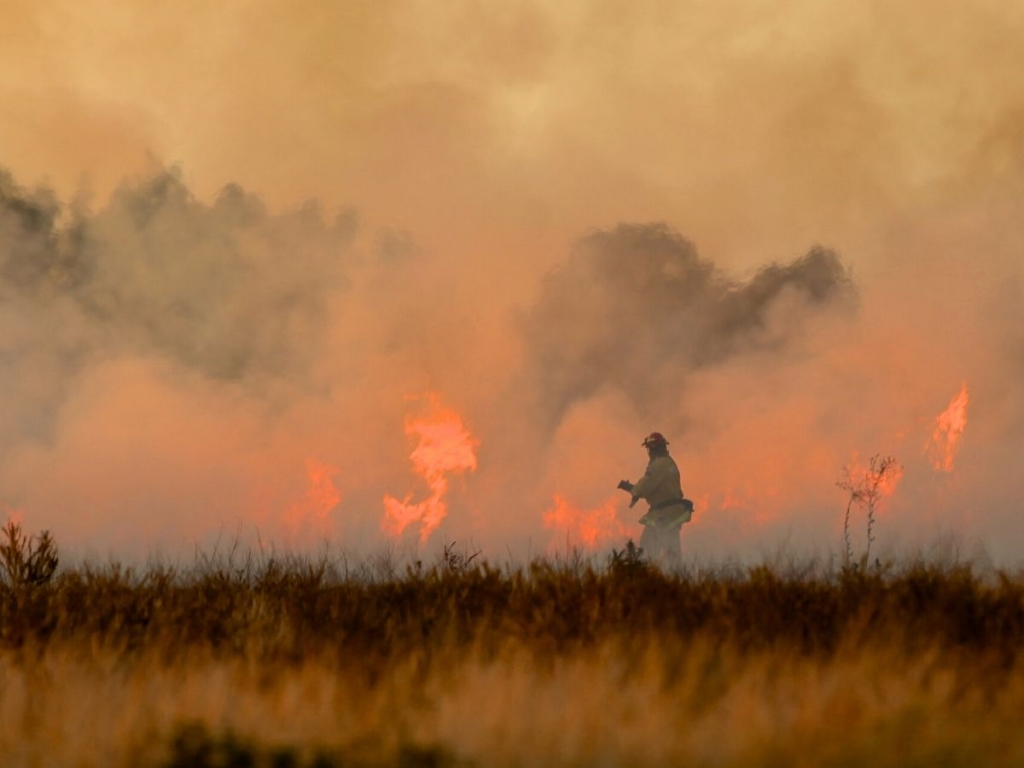
The fires were around 15 minutes south of town, mainly affecting Deepwater National Park and properties around Baffle Creek. While it was a devastating time for those directly impacted, the towns of Agnes Water and 1770 remained safe throughout the event. Roads in and out of town were never closed and the fire never came into the town.
Despite this, the broader media narrative told a very different story. Dramatic imagery, repeated headlines and viral social posts created the impression that the entire coastline was on fire. International friends were contacting all of us locals in a panic, believing all of Queensland was burning.
Locally, tourism operators felt the impact immediately and for a prolonged period of time. Cancellations rolled in just before Christmas, not because it was unsafe to travel, but because perception had overtaken reality. Some caravan parks reported up to 45 percent of bookings lost in a matter of days and the whole town took months to get back to normal tourism levels.
This experience reinforced a hard truth. If tourism businesses do not actively and consistently tell their own story during and after a disaster, the loudest voices will shape the narrative for them – making the downturn last longer and hit harder.
Why negative perception lasts longer than the disaster itself
News coverage performs a critical public safety role during emergencies. However, once that coverage shifts from warning to replay, it often continues long after the risk has passed. For people unfamiliar with your region, it becomes very difficult to judge what is and isn’t safe.
Social media accelerates this effect. Well-meaning community members share dramatic imagery from affected areas, often without context, and those images continue circulating long after recovery has begun.
Travellers do not deliberately avoid recovering regions. They simply make decisions based on the most recent or most emotional information they have seen. If your business goes quiet at this stage, silence is often interpreted as confirmation that things are still bad.
Shifting from emergency messaging to recovery messaging once the crisis has passed
Emergency communication is about safety, access and immediate status. Recovery communication is about reassurance, capability and readiness.
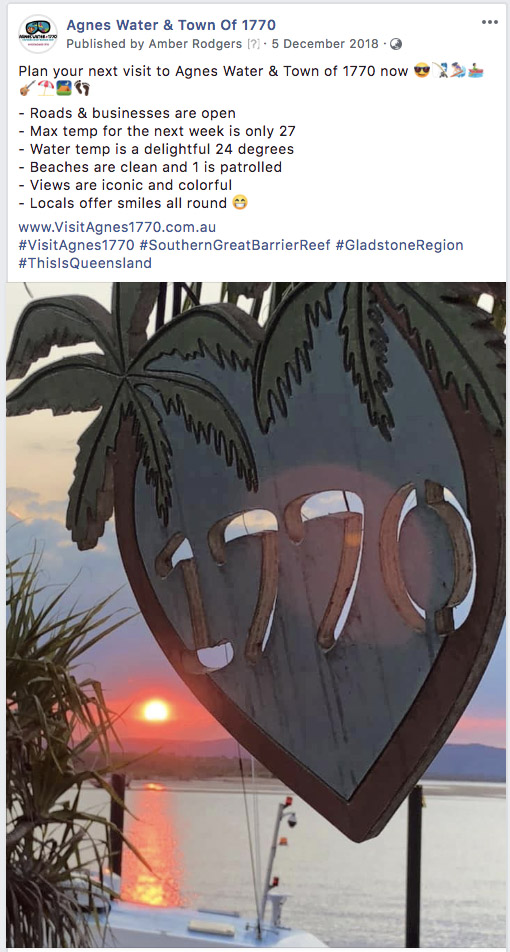
Once the immediate danger has passed, DON’T STOP POSTING! If anything, start posting more. But your messaging must deliberately change from sharing emergency information to showing the recovery phase. This is not about pretending nothing happened. It is about acknowledging the event while confidently showing what is now possible and open for business.
This transition rarely happens naturally. It requires intentional action from individual operators working in sync with their local tourism organisation and fellow businesses.
Share your real operational status with visitors
One of the first actions in the recovery phase is to provide a clear, honest and visible update about your business and location.
Visitors want to know:
- Are you open, partially open or temporarily closed?
- Are you anywhere near the danger zone?
- Are your tours operating as normal or modified?
- Are key attractions, restaurants and services operating?
- Are there road closures that affect access?
Address these questions directly on your website and across your social channels. Accompany your updates with current images of your staff, your property or your tours operating. Real-time visuals create immediate reassurance.
Use your website as your recovery control centre
Your website should become the first place you send callers, email enquiries, agents and media during the recovery phase.
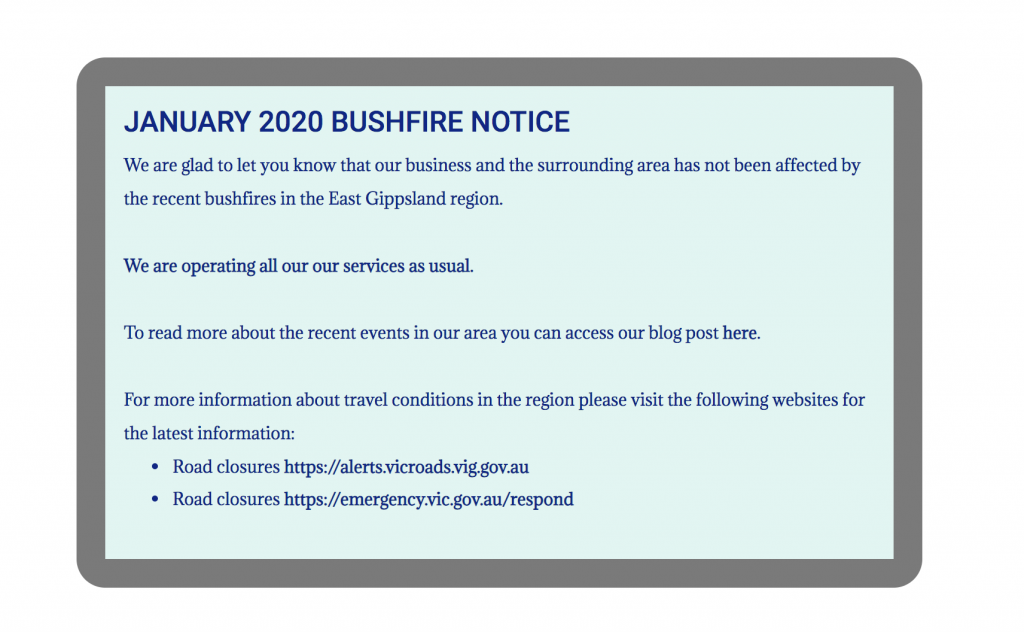
A recovery banner on your homepage is one of the most effective ways to reduce repeated enquiries. This banner should clearly state:
- Your operating status
- Whether visitors can travel safely
- Where to find official road and emergency updates
- When the message was last updated
If your business is temporarily closed, use the same banner concept to set expectations, share your estimated reopening timeline where possible, and direct visitors to nearby businesses that are open and need support.
This small action significantly reduces misinformation and protects staff from answering the same concerned questions all day.
Prepare enquiry response messages for staff
During recovery periods, your phones and inbox will be filled with the same questions. Having a prepared enquiry response message saves time and ensures communication is consistent, calm and accurate.
For businesses that are operating:
- Reassure the guest that you are open and safe
- Outline what in the region is operating
- Direct them to official emergency and road information
- Reinforce that visiting now supports the community
Below we have prepared a template for you and your team to adapt and utilise in response to any enquiries that you might receive in the wake of a disaster event such as a major bushfire.
Hello (name),
Thanks for getting in touch with us. We are happy to let you know that our business has been completely unaffected by the recent fires/cyclone/floods in our area. We are fully operational and are running all services according to our usual schedule. We understand that you may have concerns about how (town/region name) has been affected by these events and I’d like to clarify what the current situation is in our area.
Although there has been damage to some parts of the area, many fabulous local attractions are still open to the public, we’d love for you to include them on your itinerary and show our region some love during this time.
The below attractions are operating as usual:(list any visitor attractions, national parks, restaurants, wineries, breweries, accommodation providers and tour companies that you know are still operating)
Unfortunately, the below attractions are currently in recovery and therefore closed temporarily:
(list any visitor attractions, national parks, restaurants, wineries, breweries, accommodation providers and tour companies that you know are currently not operational. Limit this list to only mention the major attractions that you know your guests are likely to enquire about)
For the latest information about the bushfires/cyclone/floods please visit the (your state) emergency website, for information about road closure please visit the (your state) traffic website (add hyperlinks).
If you have any further enquiries or would like to make a booking please call us, email us or use the ‘book now’ button (add hyperlink) on our website.
We can’t wait to welcome you to (business or region name)!
Thank you,
(Your name) and all of the team at (your business name).
For businesses that are temporarily closed:
- Thank them for their enquiry
- Explain your recovery status
- Encourage them to still visit the region where possible
- Invite them to follow your updates
- Provide a future reopening timeframe if appropriate
This prevents reactive, emotional responses when staff are under pressure.
Even though your business might be out of action right now, it’s important not to discourage potential customers from visiting your region entirely. You can support your local economy by encouraging visitors to come and visit other nearby businesses that are operational. It’s also an opportunity to lay foundations for future communication by encouraging them to follow your social media channels and blog. You’ll find below a template for you to adapt and use in response to any booking enquiries that you might receive while your business is preparing to re-open:
“Hello (name),
Thanks for getting in touch with us. Our business is currently recovering from the damages that we incurred during the recent bushfires in our region so we’re sad to advise that we will not be able to accept your booking at this time.
Although WE are not able to take your booking right now, we would love for you to still visit our region. There are plenty of areas that are untouched or are recovering very quickly. You may be interested in visiting one of our neighbouring businesses that are ready to take your bookings now! You can find more information about them here: (provide links to any local businesses that are open and ready).
We are aiming to re-open our doors by June* this year (adjust recovery time as is relevant to your business) and we hope you come back to visit us then. You can follow our journey here on our Facebook page, Instagram account and news page (add hyperlinks).
Thank you,
(Your name) and all of the team at (your business name).”
Work together with other local operators
Travellers do not book one business in isolation. They want assurance that there will be things to see, do and enjoy when they arrive.
Reach out to neighbouring operators and confirm:
- Who is open
- Who is recovering
- What attractions are operating
- What dining, tours and experiences are available
Promote this information in your own posts and blogs. This shows collective readiness and helps the entire destination recover faster. It also strengthens referral relationships long after the crisis has passed.
Understand how outsiders emotionally process disaster travel
Research consistently shows that travellers experience two competing emotions after disasters:
- Fear about safety and inconvenience
- Empathy and a desire to support affected communities
Your messaging should acknowledge both.
Effective post-disaster tourism marketing typically falls into three proven approaches:
- Community readiness – “We are ready to welcome you!”
Visitors want to feel confident that the area is ready to receive visitors despite the damage that may have been done. They may be worried about being a burden on an already struggling community and feel that by visiting now, they are getting in the way of recovery. These visitors, therefore, need to be reassured that the town is ready to welcome them. Research has shown that community readiness is one of the most effective messages to use in post-disaster marketing.
Example messages:- “Our community spirit is strong and we want to share it with you.”
- “We are a foodies paradise – our cafes, restaurants, microbreweries and providores are waiting to welcome you.”
- “We are feeling grateful that so much of our beautiful region remains open for business during such a challenging time. We’d love to see you here (and we know you’ll love it too).”
- Outsider empathy – “Come and show your support!”
The generosity of others during times of disaster is something to be admired. People are incredibly willing to offer support to others in their time of need. Tourism businesses can incorporate this into their messaging by letting visitors know that one of the best ways to help a tourism town to recover is to visit in person.
Example messages:- “The best way you can support us is to do business with us, and we are open for business!”
- “Our region needs you now more than ever, come and show your support for our community.”
- “Wondering what you can do to support us after the fires? One way you can help is by visiting! With most of our business trading, there is so much to see and do!”
- Testimonials and celebrity endorsements
Guest testimonials are perceived as highly credible. Positive quotes from guests who have visited during the recovery period can be reassuring to potential visitors. Interestingly, one of the most effective post-disaster advertising techniques is to capture the endorsement of a celebrity, this may not be possible for your business but if you are able to capture a testimonial from a relevant celebrity, it will be a great advantage.
Example messages:- “I visited the Blue Mountains with my partner immediately after the fires. Although there has been damage to some of the region, we were still able to visit our favourite attractions and enjoy many activities. We hiked, biked and kayaked our way through Katoomba and Wentworth Falls and even tried caving for the first time! All of the staff we encountered were so happy to see us. We’ll be back again soon.”
– Sally Seccombe, Sydney
- “I visited the Blue Mountains with my partner immediately after the fires. Although there has been damage to some of the region, we were still able to visit our favourite attractions and enjoy many activities. We hiked, biked and kayaked our way through Katoomba and Wentworth Falls and even tried caving for the first time! All of the staff we encountered were so happy to see us. We’ll be back again soon.”
Each of these reassures travellers in a different way and removes psychological barriers to booking.
Manage cancellations to protect long-term revenue
Post-disaster cancellation management is about more than enforcing policies. It is about preserving future value.
Encouraging postponements rather than refunds protects cashflow and keeps future occupancy strong. Flexible rebooking, small incentives or bonus inclusions can often save bookings that would otherwise be lost permanently.
The most successful operators during crisis periods are those who communicate early, personally and clearly. Guests respond far better to human conversations than to automated policy emails.
Reach out to your past guests
Your past guests have emotional connection to your business and your destination. These relationships become extremely powerful during recovery.
Even without sophisticated CRM systems, a simple email campaign to past guests can:
- Restore confidence
- Generate immediate bookings
- Spread positive word-of-mouth
- Reignite repeat visitation
Your message should be honest, personal and forward-looking. Whether you are open or still rebuilding, invite them to stay connected and be part of your recovery story.
Use social media to visibly reset your reputation
Social media becomes your most powerful recovery tool once emergency coverage subsides.
Effective recovery communication follows five key principles:
- Supportive of your community and industry
- Honest about impacts and progress
- Optimistic without minimising reality
- Communicative with consistent updates
- Creative in how you showcase recovery and readiness
Live videos, regrowth updates, behind-the-scenes rebuilding, reopening milestones and returning guest stories all play a vital role in shifting perception.
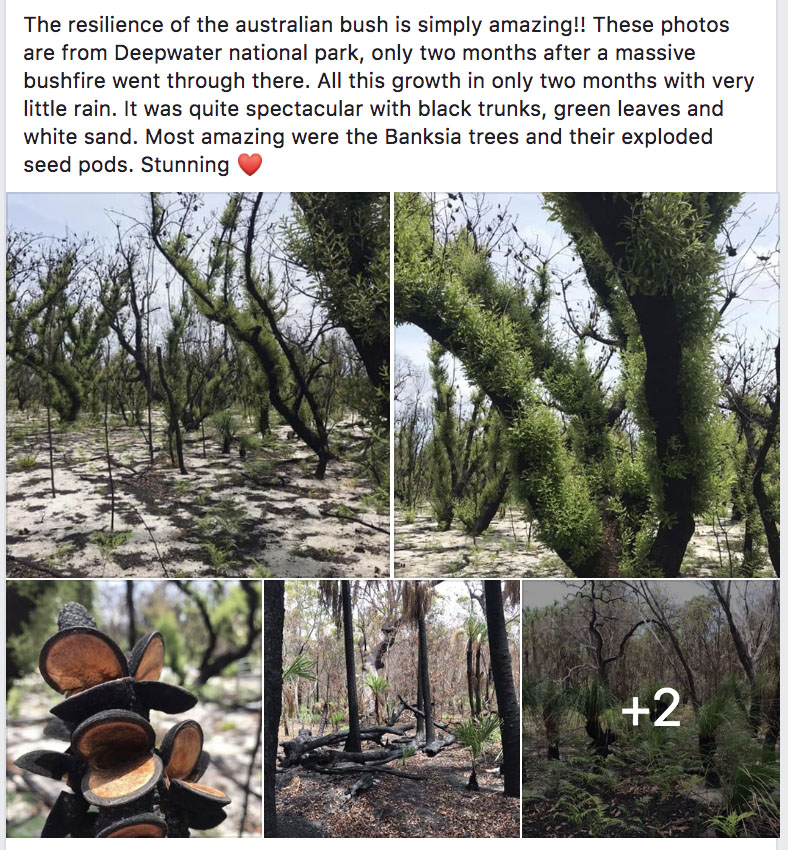
Here’s a great example post fire in 2018 where some of our local operators took photos of the regrowth in national parks.
Silence looks like hardship. Activity looks like recovery.
Align with regional and national recovery campaigns
After major disasters, regional, state and national tourism bodies often launch coordinated recovery campaigns. These provide credibility, reach and shared messaging far beyond what individual businesses can achieve alone.
Operators who align early with these campaigns consistently achieve stronger bounce-back results. This includes updating your listing information, refreshing imagery and applying any official branding or hashtag guidelines provided.
Recovery is always faster when the destination speaks with one clear, unified voice.
Where this fits into your broader crisis strategy
Recovery communication should not be improvised each time disaster strikes. The most resilient tourism businesses have:
- Pre-prepared recovery messaging structures
- Defined roles for who communicates what
- Agreed cancellation and postponement strategies
- Clear relationships with their LTO, council and regional tourism body
These foundations are built long before the event occurs.
If your region is currently calm, this should serve as a prompt to prepare properly. If you are currently in recovery mode, it provides a practical framework for restoring confidence faster.
Our Crisis Management course, included in our Digital Assistance Plans, step businesses through how to build this structure properly.
We also work with councils, RTOs and DMOs to deliver industry-wide crisis preparedness and recovery programs. If you might be interested in running resilience and crisis management communication course, check out our industry training page and our past and current programs .
FAQ
How often should I update my audience during a crisis or recovery period?
Daily during the event, and every few days in the recovery phase. Fresh timestamps build trust. Stale updates make people assume the worst.
What if my business wasn’t damaged but visitors think the whole region is closed after a disaster?
Show them what’s actually open. Post photos or short videos showing people in your business and in your region along with and a simple “here’s what’s operating today” update. Link to reliable local sources and tag your LTO or visitor centre so the message spreads faster.
Do I need to address the disaster in my marketing, or can I avoid mentioning it?
Avoiding it usually backfires. A short, factual acknowledgement followed by what is open and safe is far more effective than pretending nothing happened and builds trust.
What if my neighbours’ businesses are affected but mine isn’t? Should I say anything?
Yes. Visitors see the region as a whole. Be respectful, acknowledge the reality, and clarify what’s operational. Promote unaffected local operators to help the wider community recover.
What’s the best way to reassure guests who are thinking about cancelling after a crisis?
Show them the real conditions: current photos or a quick video, a map showing operational areas, and a simple update from your business. Seeing the actual situation is more convincing than any amount of text.
Your free AI marketing coach, right in your pocket
The free Pocket Rocket app gives you a personal AI marketing coach, website audit, weekly action plans and 5-minute tips. Built for tourism operators.