

Let us help
Related articles
Stop Treating Social Media Like a Brochure (It’s a Conversation)
You know why you hate posting on social media? Because you’re trying to make it look like a tourism brochure from 2003.
Perfect photos. Polished captions. Every post carefully crafted to look “professional.” And it takes you three hours to write four sentences, so you post once a month, feel guilty about it, and wonder why nothing happens. Social media isn’t your shop window. It’s the conversation you’d have with someone who walked into your business. And you wouldn’t stand there reading from a script, would you?
Why Your Social Media Feels Like Hard Work
Most small business owners approach social media like it’s another marketing channel to “do properly.” They see competitors with beautiful feeds and think, “I need to match that.” They worry about looking unprofessional. They second-guess every word.
The result? Paralysis. You don’t post because you can’t make it perfect. Or you batch-create content that sounds like it was written by a corporate communications team, and then wonder why no one engages.
Social media feels hard because you’re treating it like advertising when it’s actually relationship-building. The businesses that succeed on social aren’t the ones with the best photography, they’re the ones who show up consistently and sound like actual humans.
Think about the accounts you actually follow and engage with. Are they perfectly curated lifestyle magazines? Or are they people and businesses who share useful stuff, show you what’s happening behind the scenes, and occasionally make you laugh or think?
The Shop Front Framework: How Digital Actually Works
Your digital presence has three parts, and most people confuse their roles:
- Your website is your shop front. It’s where people decide if they want to do business with you. It needs to look credible, load fast, and make it easy to book or buy. Think of it as your window display — clean, clear, professional.
- Social media is the in-store conversation. It’s where you build trust, answer questions, share recommendations, and show people what it’s actually like to work with you. This is where personality matters more than polish.
- Reviews are what happens after someone leaves your shop. They’re the word-of-mouth that brings new customers in. You can’t fake them, but you can make it easy for happy customers to leave them.
Here’s where most businesses go wrong: they try to make their social media look like their website. Formal. Polished. Sales-focused. But that’s not what social media is for.
When someone walks into your accommodation or restaurant or tour business, you don’t hand them a brochure and walk away. You chat. You recommend things. You tell them what’s good today. You answer their questions. That’s what your social media should feel like.
Permission to Be Scrappy
I’m going to say something controversial: your social media content doesn’t need to be good. It needs to exist.
A scrappy post that goes up today beats a perfect post you never publish. A quick iPhone video shot in your car beats a professionally produced reel you spent three hours editing and will post… eventually… when it’s perfect.
The businesses winning on social right now aren’t the ones with the biggest budgets or the best equipment. They’re the ones showing up consistently, even when they look a bit rough around the edges.
Your audience doesn’t want perfection. They want to know who you are, what you care about, and whether they can trust you. None of that requires a ring light or a content calendar planned six weeks in advance.
What it does require: showing up. Talking like a human. Sharing things that are actually useful or interesting rather than just promotional.
If you’re stuck in perfectionism, ask yourself: what would I tell a customer if they walked in right now? That’s your next social post. Film it on your phone. Post it. Done.
What “Social” Actually Means (Hint: It’s Not Advertising)
Social media is not a billboard. It’s not a newspaper ad. It’s not your email newsletter. It’s a conversation.
When you treat social media like advertising, you post things like “Book now!” and “Limited availability!” and “Check out our latest offer!” And then you wonder why no one responds. Because that’s not a conversation — that’s you yelling at people.
Real conversations involve listening, responding, sharing useful information, and occasionally being entertaining or surprising. They involve showing up regularly, not just when you have something to sell.
Think about how you actually talk to customers in person. You tell them about the best time to visit that attraction. You warn them the road’s closed this weekend. You recommend the café down the street even though it’s not yours. You share a funny thing that happened yesterday. You answer their questions without immediately trying to upsell them.
That’s what your social media should sound like. Not a sales pitch. Not a brochure. A conversation with someone you’re trying to help.
The businesses that do this well don’t stress about “content strategy.” They just share what’s happening, what they’re thinking about, what their customers are asking. They sound like themselves, not like a brand guidelines document.
Content Ideas That Feel Like Conversations, Not Sales Pitches
If you’re stuck for ideas, here’s what actually works:
- Behind-the-scenes content. Show people what goes into running your business. The prep work. The problem-solving. The reality of your day. People find this stuff fascinating, and it builds trust because you’re not hiding anything.
- Tips and recommendations. Share your local knowledge. Best time to visit that popular spot. Where to get coffee nearby. What to pack for this season. You’re not selling anything here — you’re being useful.
- Day-in-the-life posts. Quick snapshots of what you’re doing right now. Making breakfast for guests. Setting up for a tour. Dealing with a delivery. These posts take 30 seconds to create and give people a sense of who you are.
- Customer questions answered. Someone asked you something interesting? Answer it publicly. Others probably have the same question. This positions you as helpful, not salesy.
- Things that surprised you or made you laugh. Running a business is full of unexpected moments. Share them. People connect with personality, not perfection.
- Local updates and insights. Road closures, weather patterns, seasonal changes, events happening nearby. You know this stuff anyway, just post it.
None of these require professional photography. None require hours of planning. They’re just you, talking to people like you would in person.
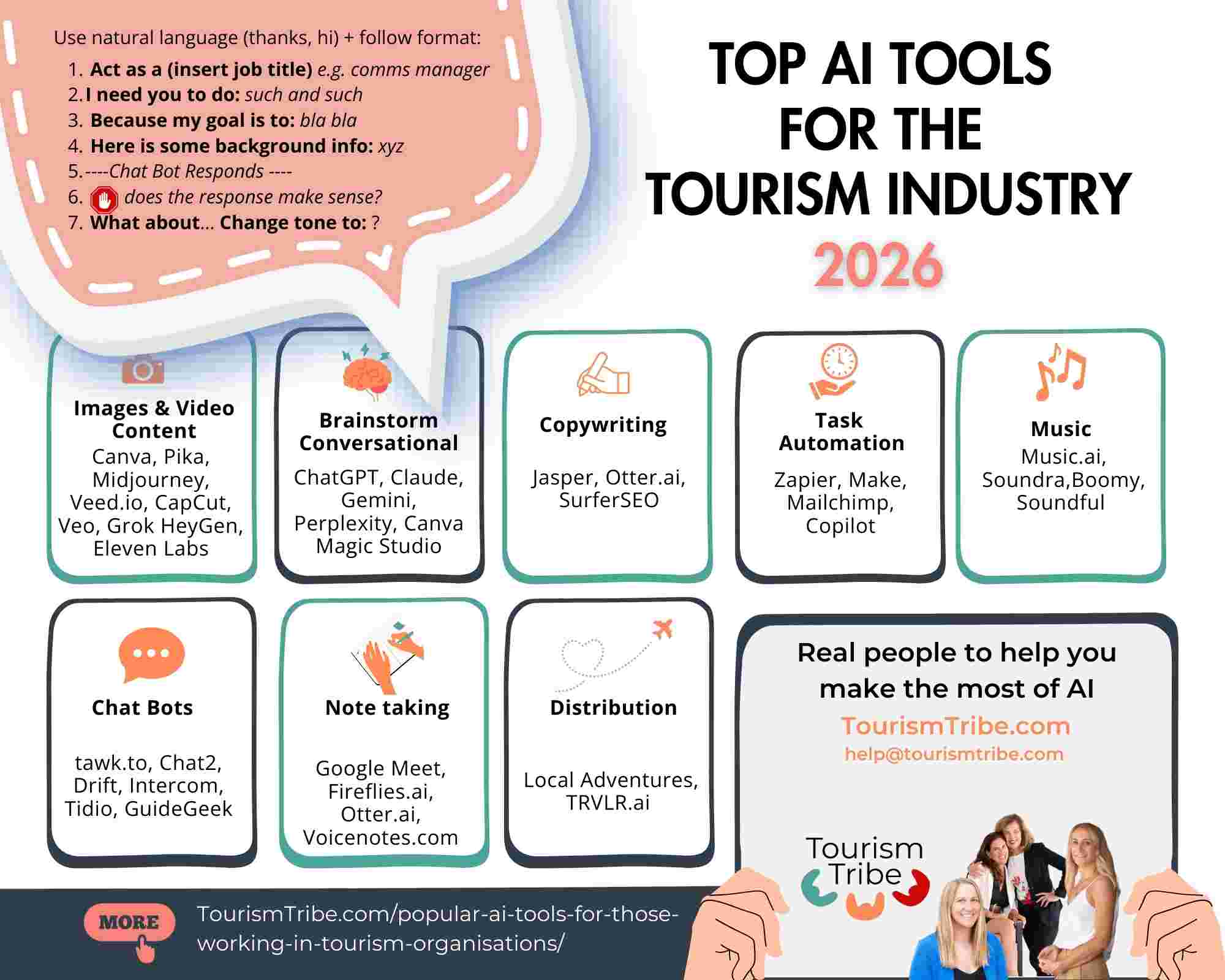
If you’re really stuck, use AI to brainstorm. Feed ChatGPT a description of your business and ask it to generate 20 conversation-starter post ideas. Pick the ones that feel natural to you and ignore the rest. Don’t let AI write your posts for you, but let it help you get unstuck when you’re staring at a blank screen.
The goal isn’t to create content marketing masterpieces but show up, sound like yourself, and be useful often enough that people remember you exist.
Where to from here?
Top AI Tools for the Tourism Industry - Free cheatsheet
+ Bonus Cheatsheets & Templates
