Untangling Tourism Tech — Podcast
13 May 2026
For 25 years, the online travel booking experience looked roughly the same. A traveller would visit up to 30 different websites, piece together an itinerary, and bounce between booking platforms to confirm each product. AI changed the inspiration and planning side of that journey almost overnight. The booking side? That took a lot longer.
In episode 19 of Untangling Tourism Tech, Liz Ward talks with Daniel Blickling, founder of Traveloris, and Dhruv Sharma, the company’s product manager, about what it actually takes to bring personalised itinerary generation and live booking together in a single session. This episode is a recording of a live webinar held in April 2026.
Liz opens by framing the shift. Where a traveller once moved linearly through awareness, research, consideration, and booking, the AI era compresses that into something far shorter. A single prompt to ChatGPT, Perplexity, or Google’s AI overview returns a personalised itinerary in seconds. The traveller arrives at a destination website having already done most of their research, with high intent to act.
That changes the job of a destination website. It’s no longer where discovery happens. It’s where conversion happens. And if the website can’t handle the transaction when a high-intent visitor arrives, that intent disappears.
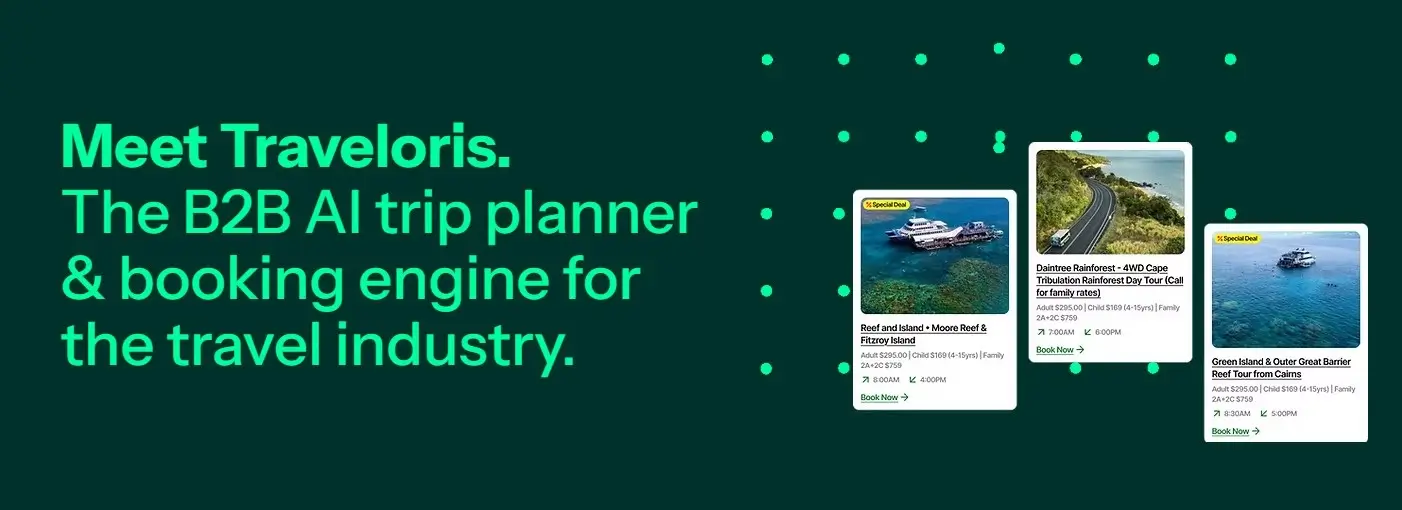
Traveloris is a B2B trip planner widget that plugs into destination marketing organisation and travel agency websites. Operators answer questions about their region, define their bookable products, and set preferences for how the AI weights different tours and attractions. The widget then generates personalised itineraries for visitors, with live availability checked across multiple booking partners at the time of itinerary creation.
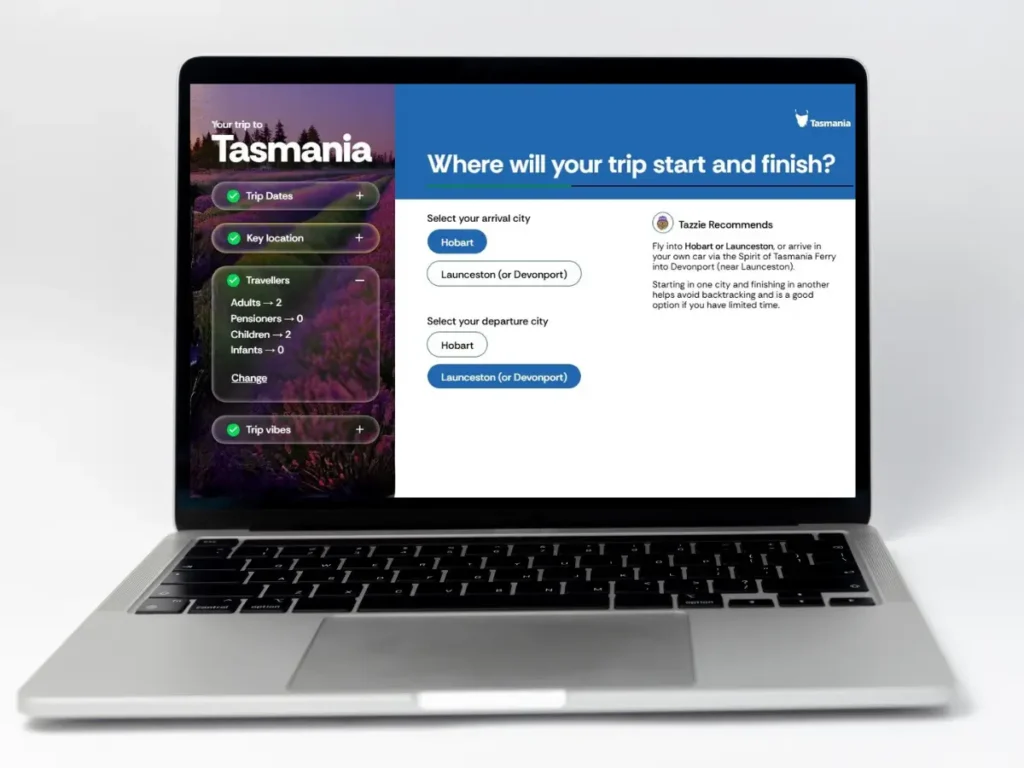
The platform launched on Tasmania.com and Cairns Discovery Tours in early 2026, with several other implementations in the pipeline. For WordPress sites, it’s a simple plugin install. For larger platforms, it connects via API.
A small piece of trivia: the name Traveloris comes from the loris, a small endangered animal Daniel became fond of about 13 years ago when he first started building the product. The company rebranded from Traveler AI in 2026 after finding the name difficult to trademark. The loris is back.

The hardest part of building Traveloris wasn’t the AI. It was the booking.
Dhruv explains that connecting to 25+ booking channels, managing live availability, handling edge cases across different booking systems, and building a shopping cart that worked across all of them without a 15-minute timeout took the team three years to get right. “We thought we could do it in three months,” Daniel says.
Even after going live, there were early problems. Booking systems with no family pricing. Visitors accidentally sent to operators’ home addresses. Edge cases that couldn’t be anticipated until real bookings started flowing through. The team has since resolved 99% of them. This is also why Daniel says the large language models didn’t get there first. ChatGPT’s announcement that it would leave travel fulfilment to specialist apps was, for Traveloris, the confirmation they’d been right to focus on this problem.
Dhruv walks the webinar audience through a live demo on cairnsdiscoverytours.com. A visitor selects their travel dates, party size, and interests from a curated list defined by the client. The AI generates a day-by-day itinerary including one bookable tour per day, free activities matched to the region, and dining recommendations.
Visitors can swap tours from a list of alternatives, check live availability for each, and complete all bookings in a single transaction. A confirmation email follows with the full itinerary including bookable and free content.
One feature operators particularly value is the Traveloris dashboard, which shows which itineraries were generated, what was booked, and where visitors dropped off in the flow.
Daniel’s advice for destination marketing organisations is direct. First, make sure the destination appears in AI search results. That means optimising content for answer engines (not just Google): structured, specific, locally grounded content that AI tools can reference and cite. If a destination’s content is the quality source that feeds LLM responses, that’s a KPI in itself.
Second, focus on what happens when that high-intent visitor arrives. They’ve done their research. They want to act. A destination website that can’t facilitate a booking at that moment loses the conversion.
Liz adds another angle: local knowledge is now a competitive advantage in a way it wasn’t before. An OTA based in San Francisco cannot match the depth of a destination website that genuinely knows its region. That local expertise, fed into an AI system like Traveloris, is what separates a useful itinerary from a generic one.
Dhruv outlines two major items on the roadmap. Accommodation is coming, which will allow visitors to book tours and places to stay together in one itinerary. The second is a chat analytics agent for operators, so they can query their Traveloris data in natural language (“What were my top-selling tours in March?”) rather than building custom reports.
Both came directly from client feedback, which Dhruv says is how most of the roadmap is shaped.
Liz closes the webinar with two Tourism Tribe resources. The AI and Tourism Playbook, launched on 1 April 2026, is a free practical guide covering AI tools for tourism operators and where the travel purchase cycle currently sits. The Pocket Rocket app (my.tourismtribe.com) is a web app that includes an automated AI website audit when operators sign up.
Both are free starting points for operators who want to understand where AI is heading and what to do about it now. Further reading: for the other half of this shift, where the checkout itself moves inside search, see our guide to Google’s Universal Cart.
Traveloris is a B2B AI trip planner that plugs into destination and travel websites as a widget. It generates personalised, bookable itineraries for visitors based on their interests and travel dates, with live availability checked across multiple booking partners at the time of generation.
ChatGPT and other large language models can generate travel itineraries but cannot handle live bookings. Traveloris connects directly to 25+ booking channels and processes real bookings within the itinerary session. ChatGPT announced it would not pursue travel fulfilment, leaving that to specialist platforms.
A visitor selects their travel dates, party size, and interests. The AI generates a day-by-day itinerary with one bookable tour per day, free activities, and dining options. Visitors can swap tours, check live availability, and complete all bookings in a single checkout. A confirmation email with the full itinerary follows.
Two priorities: first, ensure the destination appears prominently in AI search results by optimising content for answer engines, not just Google. Second, make sure the destination website can convert high-intent visitors who arrive having already decided on a trip. Those visitors have done their research and are ready to book.
For WordPress sites, Traveloris offers a plugin that connects directly to the platform. For larger destination websites, integration is via API. Tasmania.com and Cairns Discovery Tours both completed integration in early 2026.
Two major features are in development: accommodation booking, so visitors can include accommodation in their itinerary alongside tours, and a natural language chat agent for operators to query their analytics data. Both features were shaped by feedback from existing clients.
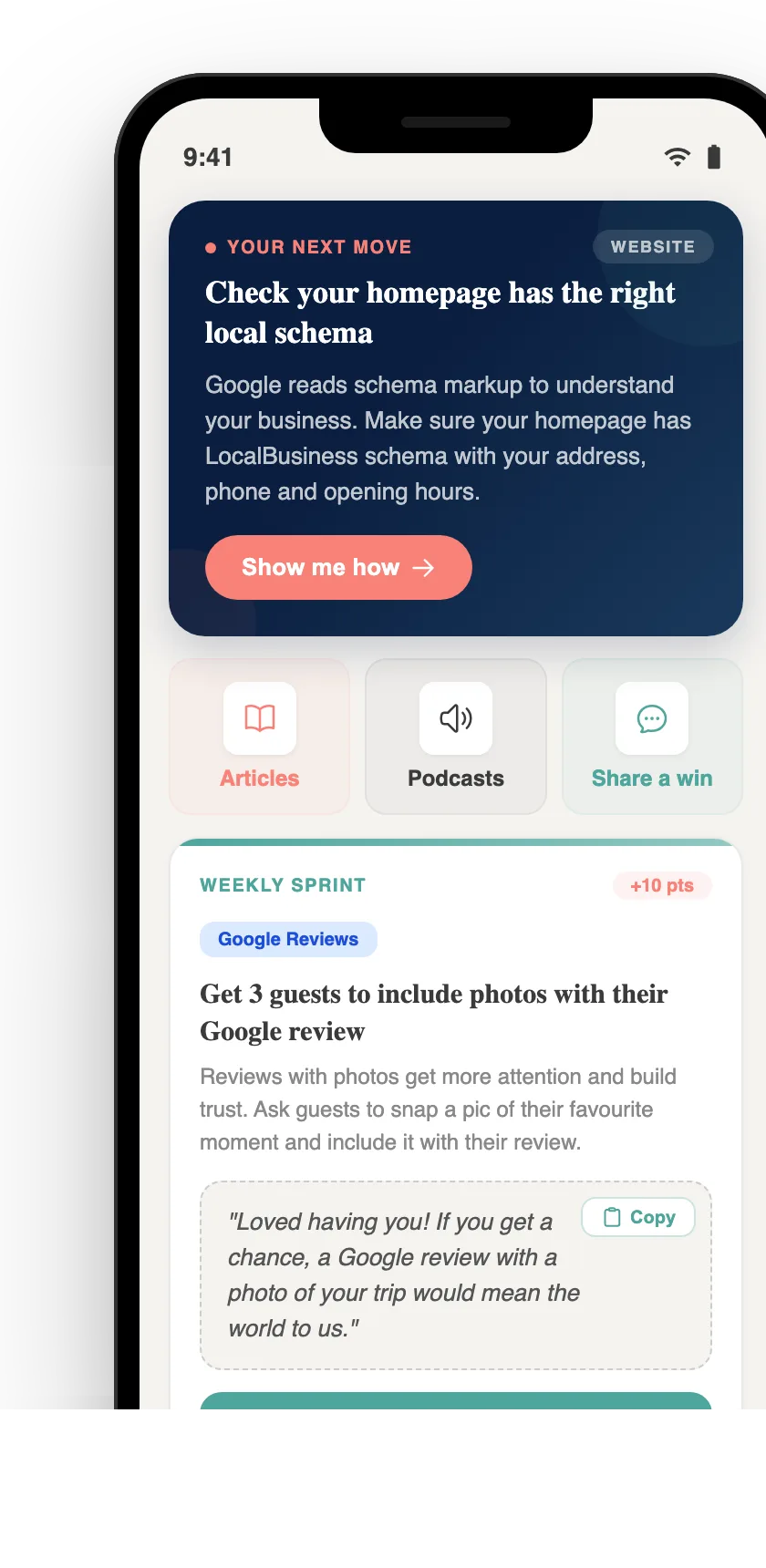
The free Pocket Rocket app gives you a personal AI marketing coach, website audit, weekly action plans and 5-minute tips. Built for tourism operators.
Get access to all our training, coaching, and tools built for tourism operators who want to grow with confidence.
Explore membership