Untangling Tourism Tech — Podcast
30 January 2026




Tourism operators often feel like they are swimming in an ocean of change when it comes to technology, but 2026 marks a specific turning point in how we use artificial intelligence. In this episode, Liz and Fab walk through the transition from static AI models to active digital agents: tools that do not just talk but actually get things done.
If you have been feeling overwhelmed by the constant updates to ChatGPT or Gemini, this episode brings much needed clarity. We move past the era of generic chatbots and into the world of digital doers that can help your destination stay relevant, sustainable, and accurate.
The first thing to understand about the AI landscape in 2026 is the difference between an LLM and an Agent. A Large Language Model (LLM), like the standard version of ChatGPT, is essentially a static brain: it contains a massive database of information and waits for someone to ask a question.
An AI Agent is the body: it is a doer that has a goal, a memory, and a specific set of rules to follow. While the brain knows things, the body does things. This shift means AI is moving from a research tool to a functional assistant that can follow a playbook you create for your business.
We have all seen the damage that outdated AI information can do to a brand. Fab shares the example of the Paperbark Walk in Agnes Water, which was closed for several years. Because old AI models relied on web scrapes from years ago, they would frequently tell tourists the walk was open and “amazing,” leading to frustrated visitors and negative sentiment.
AI Agents solve this by connecting to live, structured data sources. Instead of just guessing based on the internet, an Agent can check a specific text file or a volunteer’s update to verify if a location is open today. It provides accuracy that generic chatbots simply cannot match.
A new term every Destination Marketing Organisation (DMO) needs to learn is agent legibility. In the past, we focused on making websites look pretty for humans. Now, the priority is making your local knowledge machine readable so that AI Agents can find it and use it.
This does not require a massive, expensive IT transformation. It involves:
The absolute advantage for regional tourism is the passion and local knowledge of the people on the ground. AI cannot create lived experience, it can only learn it.
Liz and Fab suggest that the race is now on to harvest the local tips and stories from your visitor centre staff and volunteers. Whether you record their voices or take raw notes, getting that information into a digital format ensures your destination’s unique “soul” is represented in the AI answers of the future.
Google has made massive strides in integrating AI into its platforms. Through Google Workspace, AI can now access your business documents and emails to help run your back office more efficiently.
Fab notes that this is not a technology for the distant future: these are pre-built packages ready to be used now. By adopting these tools, tourism operators can spend less time on administration and more time on the human side of their business.
The core message of this episode is simple: do not wait for the technology to be perfectly understood before you start. The AI landscape will continue to change every few months, but starting the process of digitising your knowledge now makes it much easier to adapt later. Take small steps, test the tools, and start building your partnership with AI today.
Tourism Tribe members get access to our regular tech sessions where we dive deep into practical demos of these tools. If you want support, clarity, and a community that is using this technology to grow their visitor economy, check out our memberships and join us.
An Agent is an AI tool that has a specific goal and a set of instructions. Unlike a chatbot that just talks, an Agent can use tools, access specific databases, and follow a playbook to get a job done.
While developers can help with complex builds, many Agent frameworks are becoming “plug and play.” You can often grab pre-built Agents from platforms like Google and customise them with your own data.
Join the club, I don’t know anyone who does. To push past this aversion, start by filming what you love in your region or add a voiceover if showing your face is too scary for now. But over time, showing up as the human behind the business will always connect better.
Google now provides AI summaries in search results, which often give visitors the answer they need without them ever having to click on your website. This is why making your data “legible” to these Agents is more important than ever.
No, it is often more about the time spent organising your information than a large financial investment. Capturing local knowledge in a digital format is a low cost way to start.
AI can handle the information, but it cannot replace the lived experience and human passion that makes a destination special. The goal is to use AI to handle the heavy lifting so humans can focus on the visitor experience.
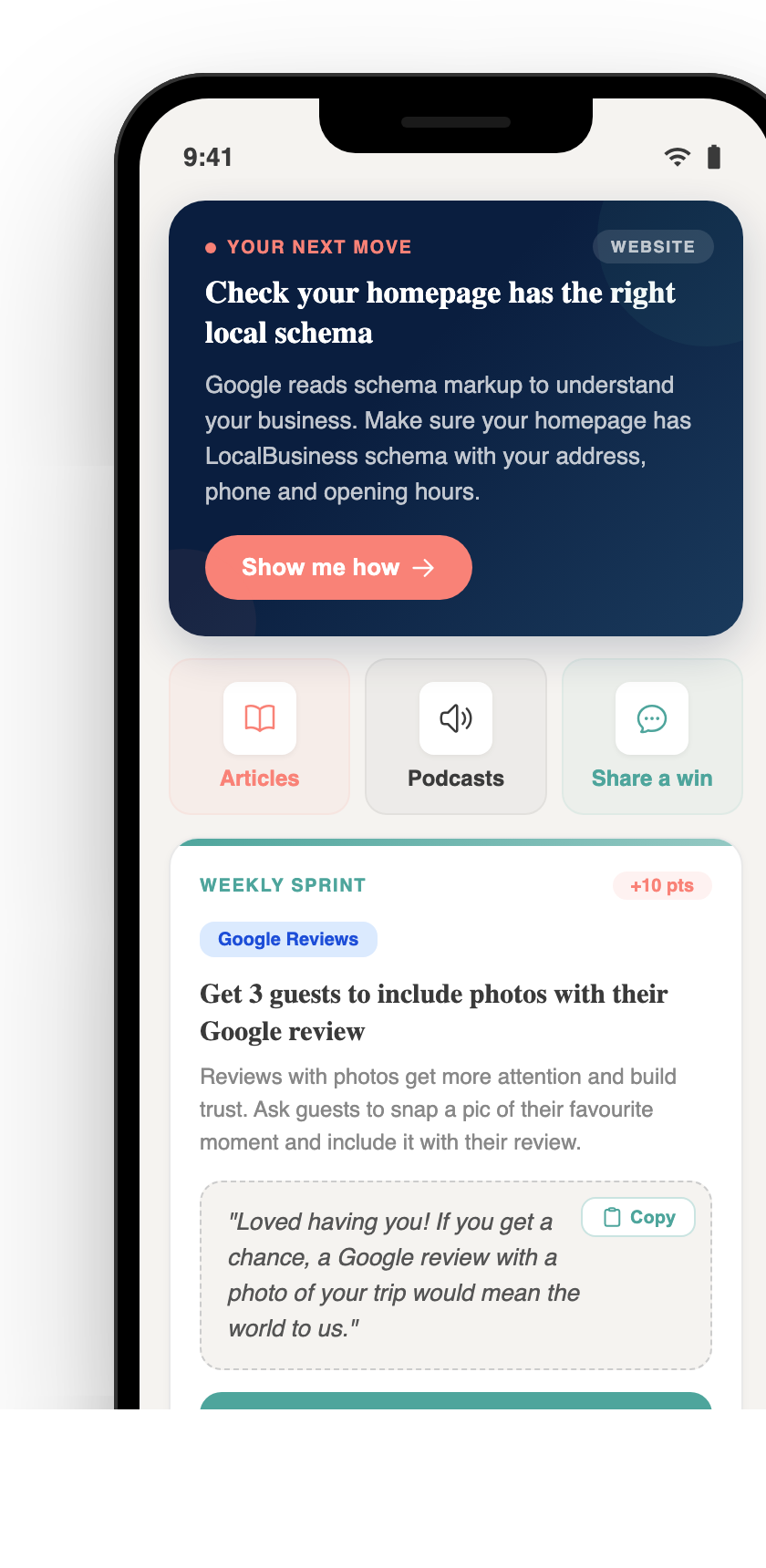
The free Pocket Rocket app gives you a personal AI marketing coach, website audit, weekly action plans and 5-minute tips. Built for tourism operators.
Get access to all our training, coaching, and tools built for tourism operators who want to grow with confidence.
Explore membership